Stenosing Tenosynovitis And Finger Stiffness How To Move Better
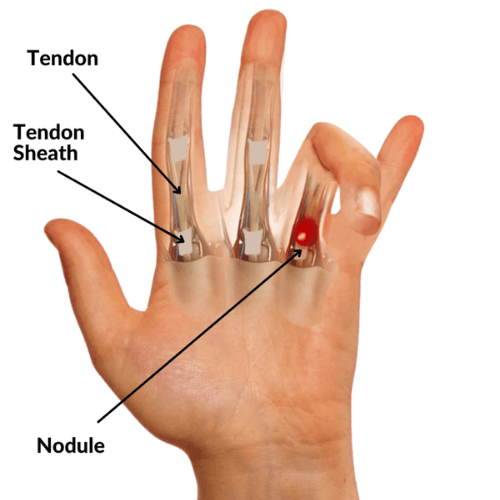
Stenosing flexor tenosynovitis is a condition that affects the flexor tendons of the fingers and can lead to finger stiffness, pain, clicking, or locking during movement. The flexor tendons normally glide smoothly through a pulley system that keeps them close to the bone and allows efficient finger motion. When the tendon or its surrounding sheath becomes thickened or irritated, smooth movement is disrupted.
Finger stiffness often develops gradually and is commonly worse in the morning or after periods of inactivity. Some individuals notice clicking or catching when bending or straightening the finger, while others experience painful locking that may require assistance from the opposite hand. Symptoms may interfere with gripping, typing, lifting, or other daily hand activities.
At Cole Pain Therapy Group, stenosing tenosynovitis is evaluated with attention to tendon mechanics, hand and wrist use patterns, and contributing movement stresses that influence long-term recovery and function.
How Do you Treat Stenosing Flexor T enosynovitis?
Treatment focuses on reducing tendon irritation while restoring smooth motion through the finger pulley system and improving overall hand mechanics.
Conservative care may include:
Activity modification to limit repetitive gripping or forceful finger use
Manual therapy to improve tendon glide and reduce tissue stiffness
Targeted finger and hand exercises to restore controlled movement
Addressing wrist, forearm, and grip mechanics that increase tendon strain
Early intervention often leads to better outcomes. When care addresses both tissue health and movement quality, many individuals experience improved finger motion, reduced stiffness, and less locking without the need for invasive procedures.
What Causes Trigger Finger Stenosing Tenosynovitis?
Stenosing flexor tenosynovitis develops when the flexor tendon repeatedly rubs against a narrowed pulley, most commonly near the base of the finger at the metacarpophalangeal joint.
Common contributing factors include:
Repetitive hand use or gripping activities
Prolonged or forceful finger flexion
Tendon thickening or pulley irritation
Local inflammation or metabolic influences
Cumulative microstrain over time
As irritation progresses, the tendon may momentarily stick during movement, creating the sensation of catching, snapping, or locking commonly referred to as trigger finger.
What is Tenosynovitis of the Finger Flexors?
Tenosynovitis of the finger flexors refers to inflammation or thickening of the tendon sheath that surrounds the flexor tendons of the fingers. This sheath allows the tendon to glide smoothly during bending and straightening movements.
When the sheath becomes irritated, tendon motion becomes restricted. This restriction can lead to pain, stiffness, reduced grip strength, and difficulty fully bending or straightening the finger. In stenosing tenosynovitis, restriction is most pronounced at the pulley level, where mechanical narrowing limits tendon glide.
What are the Four Cardinal Signs of Flexor Tenosynovitis?
Flexor tenosynovitis is classically associated with four key clinical signs:
The finger rests in a partially flexed position
Swelling along the length of the affected finger
Tenderness along the flexor tendon sheath
Pain with passive finger extension
Not all individuals experience all four signs. In chronic or non-infectious cases, symptoms may present more subtly, often as stiffness, discomfort, or intermittent locking rather than obvious swelling or severe pain.
At Cole Pain Therapy Group, care begins with a detailed evaluation of finger, hand, wrist, and forearm movement to identify why the tendon is becoming irritated rather than focusing solely on where symptoms occur.
Treatment plans are individualized and may include manual therapy, targeted strengthening, movement retraining, and load management strategies designed to restore smooth tendon motion, improve hand function, and reduce recurrence risk. Patients from Memphis, Bartlett, Lakeland, and Arlington choose Cole Pain Therapy Group for movement-focused care that supports long-term hand health and confident daily use.
Related Reads
NEW PATIENTS
Step 1
Call today to schedule your convenient appointment.
Step 2
Pre-register your important health information on your phone or computer to save time.
Step 3
Meet your new doctor for a customized plan and start moving toward your goal!
Discover how we may help!
We are the Memphis area’s top-rated chiropractic group, providing you with gentle chiropractic care, dry needle therapy, exercise therapy, and therapeutic massage.

2845 Summer Oaks Dr, Memphis, TN 38134
(901) 377-2340
Life Shouldn't Hurt!
You Deserve To Feel Great. We Can Help!
Your go-to Chiropractor in Memphis, TN

Richard L. Cole, DC, DACNB, DAIPM, FIACN, FICC
Jeffrey D. Luebbe, DC, CCRD, CCSP
W. Steven Vollmer, DC, DAAPM
Bradford J. Cole, DC, MS, CSCS
J. Colby Poston, DC
Daniel H. Smith, DC
2845 Summer Oaks Dr., Memphis, TN 38134
(901) 377-2340
Monday – Friday:
8:00 AM – 6:00 PM
Saturday :
8:00 AM – 12:00 PM
Walk-ins are Welcome!
© 2025 Cole Pain Therapy Group, All Rights Reserved