Superficial Radial Neuropathy How To Reduce Pain And Restore Function
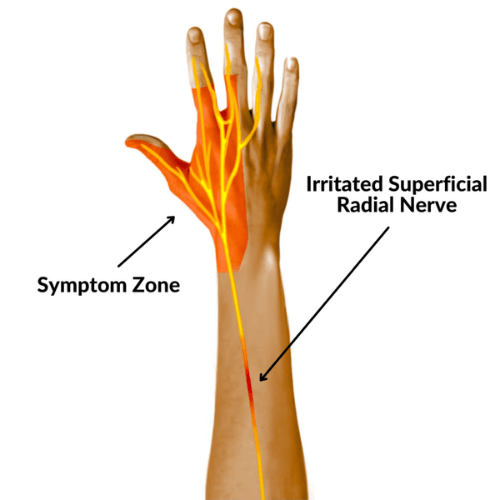
Superficial radial neuropathy is a sensory nerve condition that affects the back of the hand, thumb, and wrist. It occurs when the superficial branch of the radial nerve becomes irritated or compressed as it travels along the forearm toward the wrist. This condition is also referred to as cheiralgia paresthetica or Wartenberg syndrome.
Because the superficial radial nerve is a purely sensory nerve, symptoms typically involve pain, burning, tingling, or altered sensation rather than muscle weakness. Symptoms may be intermittent or persistent and are often influenced by wrist motion, forearm use, or external pressure.
At Cole Pain Therapy Group, care focuses on determining whether superficial radial nerve irritation is the true source of symptoms and identifying the mechanical or movement-related factors contributing to nerve sensitivity so treatment can be targeted and effective.
How do you Treat Radial Neuropathy?
Treatment for superficial radial neuropathy centers on reducing nerve irritation and eliminating the mechanical stress that compresses or irritates the nerve along its pathway.
Common components of care include:
Activity modification to reduce repetitive wrist, forearm, or gripping stress
Manual therapy to improve soft tissue mobility around the nerve
Nerve gliding exercises to restore normal nerve movement
Postural and movement correction to reduce ongoing compression
In cases where symptoms become persistent or recurrent, advanced therapies such as focused shockwave therapy may be considered to improve tissue quality surrounding the nerve and support recovery. Treatment is always guided by a thorough clinical examination to confirm the nerve involved and rule out other sources of wrist or hand pain.
What are the Symptoms of a Superficial Radial Nerve Injury?
Symptoms of superficial radial neuropathy are typically felt along the thumb side of the wrist and the back of the hand.
Common symptoms include:
Burning, sharp, or aching pain along the wrist or forearm
Tingling or numbness over the thumb and index finger region
Sensitivity to touch or pressure from watches, bracelets, or tight sleeves
Pain that worsens with wrist motion, gripping, or repetitive hand use
Because the nerve lies close to the skin, even light compression can reproduce symptoms. Many individuals notice that symptoms fluctuate based on activity level, positioning, or external pressure.
How Long does it Take for a Radial Nerve to Heal?
Healing timelines vary depending on the severity and duration of nerve irritation.
Mild cases may improve within several weeks once compression is reduced
More persistent cases may take several months, especially if repetitive stress or faulty movement patterns are not corrected
Early intervention improves recovery timelines by preventing chronic nerve sensitivity and reducing repeated irritation to the nerve.
How do you Treat Superficial Nerve Damage?
Superficial nerve irritation responds best to conservative, movement-focused care that restores normal tissue mobility and reduces mechanical stress on the nerve.
Treatment may include:
Hands-on soft tissue techniques
Guided nerve mobility exercises
Gradual return to normal hand and wrist activity
Correction of contributing ergonomic, postural, or movement factors
Most cases of superficial radial neuropathy do not require injections or surgery when addressed early and managed appropriately.
At Cole Pain Therapy Group, every patient begins with a detailed evaluation to determine whether the superficial radial nerve is the primary source of symptoms. Assessment includes nerve sensitivity, surrounding soft tissue mobility, joint mechanics, and movement patterns that may be contributing to irritation.
Care is individualized to reduce pain, restore normal sensation, and help patients return to daily activities without recurring nerve symptoms. Patients from Memphis, Bartlett, Lakeland, and Arlington choose Cole Pain Therapy Group for precise, movement-focused care designed to support long-term relief and functional recovery.
Related Reads
NEW PATIENTS
Step 1
Call today to schedule your convenient appointment.
Step 2
Pre-register your important health information on your phone or computer to save time.
Step 3
Meet your new doctor for a customized plan and start moving toward your goal!
Discover how we may help!
We are the Memphis area’s top-rated chiropractic group, providing you with gentle chiropractic care, dry needle therapy, exercise therapy, and therapeutic massage.

2845 Summer Oaks Dr, Memphis, TN 38134
(901) 377-2340
Life Shouldn't Hurt!
You Deserve To Feel Great. We Can Help!
Your go-to Chiropractor in Memphis, TN

Richard L. Cole, DC, DACNB, DAIPM, FIACN, FICC
Jeffrey D. Luebbe, DC, CCRD, CCSP
W. Steven Vollmer, DC, DAAPM
Bradford J. Cole, DC, MS, CSCS
J. Colby Poston, DC
Daniel H. Smith, DC
2845 Summer Oaks Dr., Memphis, TN 38134
(901) 377-2340
Monday – Friday:
8:00 AM – 6:00 PM
Saturday :
8:00 AM – 12:00 PM
Walk-ins are Welcome!
© 2025 Cole Pain Therapy Group, All Rights Reserved