Unlock Relief From Shoulder Pain With Dry Needling Therapy
Shoulder pain can make everyday activities such as reaching overhead, lifting, exercising, getting dressed, or even finding a comfortable sleeping position difficult. One common contributor is functional shoulder pain, which can develop when the muscles responsible for shoulder movement and stability stop working together efficiently. Some muscles may become weak or underactive while others become tight or overactive, leading to restricted mobility, reduced stability, and painful myofascial trigger points.
Myofascial trigger points are sensitive areas within tight muscle tissue that can cause pain directly at the shoulder or refer discomfort into nearby areas. These trigger points may interfere with normal muscle function and make movements such as reaching, lifting, or rotating the arm uncomfortable. Because shoulder pain can also originate from the rotator cuff, joints, tendons, neck, or other structures, identifying the source of your symptoms is an important first step before beginning treatment.
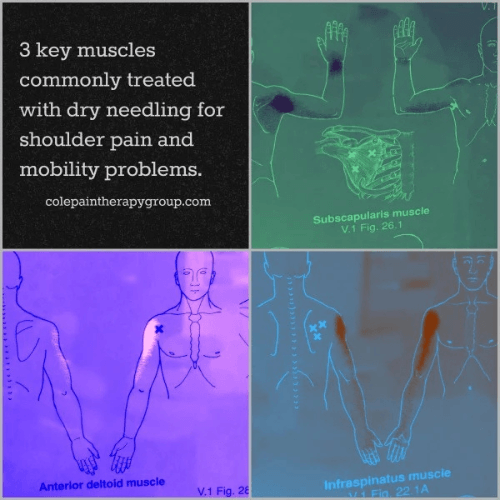
When muscle imbalance and trigger points contribute to shoulder pain, functional dry needling may be incorporated into a personalized treatment plan. Dry needling uses a small, thin needle inserted into specific areas of dysfunctional muscle. When a trigger point is stimulated, the muscle may produce a brief local twitch response, which can help decrease muscle tension, reduce trigger-point sensitivity, and improve how the affected muscle functions.
Dry needling is most useful when treatment goes beyond the painful area itself. Reducing muscle tension and trigger-point sensitivity may improve shoulder mobility and create a better foundation for therapeutic exercise and rehabilitation. Strengthening weak or underactive muscles and restoring healthier movement patterns can then help address the muscle imbalance contributing to recurring shoulder pain.
Why does my shoulder hurt more after dry needling?
Temporary shoulder soreness can occur after dry needling because the treatment directly stimulates muscle fibers and trigger points. The local twitch response may leave the treated muscle feeling tender or achy afterward, similar to muscle soreness following exercise. This does not necessarily mean your shoulder condition has worsened. However, severe pain, worsening symptoms, or discomfort that persists longer than expected should be discussed with your healthcare provider.
Does dry needling in the shoulder hurt?
Dry needling can cause brief discomfort, but the sensation varies from person to person. You may feel very little when the thin needle enters the skin, while stimulation of a trigger point can produce a quick twitch, cramping sensation, or temporary ache within the muscle. Some mild soreness may also occur after treatment.
Is dry needling effective for shoulder pain?
Dry needling may help when myofascial trigger points, excessive muscle tension, or muscle imbalance are contributing to shoulder pain. By targeting dysfunctional muscle tissue, dry needling may decrease pain, improve mobility, and support more efficient muscle function. Because shoulder pain can have many different causes, an accurate diagnosis is important for determining whether dry needling is appropriate for your specific condition.
How long should you have pain after dry needling?
Mild soreness after dry needling is generally temporary and may feel similar to post-exercise muscle soreness. How long it lasts can vary depending on the muscles treated, the treatment performed, and your individual response. If pain becomes severe, continues to worsen, or persists longer than expected, contact your healthcare provider.
At Cole Pain Therapy Group, we evaluate your shoulder function and movement patterns to determine whether muscle imbalance and myofascial trigger points are contributing to your pain. When appropriate, functional dry needling may be combined with therapeutic exercise, rehabilitation, chiropractic care, and other conservative treatments to reduce muscle tension, improve shoulder mobility and function, and help you return to reaching, lifting, exercising, work, and everyday activities with greater comfort.
Related Reads
NEW PATIENTS
Step 1
Call today to schedule your convenient appointment.
Step 2
Pre-register your important health information on your phone or computer to save time.
Step 3
Meet your new doctor for a customized plan and start moving toward your goal!
Discover how we may help!
We are the Memphis area’s top-rated chiropractic group, providing you with gentle chiropractic care, dry needle therapy, exercise therapy, and therapeutic massage.

2845 Summer Oaks Dr, Memphis, TN 38134
(901) 377-2340
Life Shouldn't Hurt!
You Deserve To Feel Great. We Can Help!
Your go-to Chiropractor in Memphis, TN

Richard L. Cole, DC, DACNB, DAIPM, FIACN, FICC
Jeffrey D. Luebbe, DC, CCRD, CCSP
W. Steven Vollmer, DC, DAAPM
Bradford J. Cole, DC, MS, CSCS
J. Colby Poston, DC
Daniel H. Smith, DC
2845 Summer Oaks Dr., Memphis, TN 38134
(901) 377-2340
Monday – Friday:
8:00 AM – 6:00 PM
Saturday :
8:00 AM – 12:00 PM
Walk-ins are Welcome!
© 2025 Cole Pain Therapy Group, All Rights Reserved