Piriformis Syndrome: How To Alleviate Pain And Prevent Recurrence
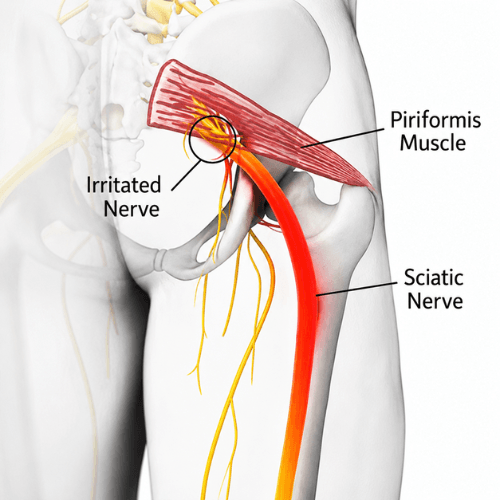
Pain that starts deep in the buttock and travels down the back of the leg isn’t always caused by a problem in the lower back. In some cases, the source of the discomfort is the piriformis muscle—a small muscle located deep beneath the gluteal muscles that helps stabilize and rotate the hip. When this muscle becomes tight, inflamed, or irritated, it can place pressure on the nearby sciatic nerve, resulting in a condition known as piriformis syndrome. Because its symptoms closely resemble lumbar sciatica, piriformis syndrome is frequently mistaken for a herniated disc or other spinal conditions. It is also recognized as one of the conditions within deep gluteal syndrome, a group of disorders involving compression of the sciatic nerve in the buttock.
People with piriformis syndrome often experience deep buttock pain that may radiate into the back of the thigh and, in some cases, below the knee. Symptoms can develop suddenly after a fall, sports injury, or muscle strain, but they may also appear gradually from prolonged sitting, repetitive running, cycling, stair climbing, or other activities that place repeated stress on the hip muscles. Sitting for long periods, crossing the legs, standing from a chair, or walking uphill may make symptoms worse.
Accurately identifying the source of the pain is an important first step because several conditions can produce similar symptoms. Clinical evidence supports conservative treatment approaches that improve hip mobility, reduce muscle tension, strengthen the surrounding muscles, and restore healthy movement patterns to relieve pressure on the sciatic nerve. With an individualized rehabilitation plan, many people can return to their normal activities while reducing the likelihood of future flare-ups.
How do you treat piriformis syndrome?
Treatment focuses on reducing pressure on the sciatic nerve while improving the function of the hip and surrounding muscles. Depending on your symptoms, treatment may include:
- Therapeutic stretching and strengthening exercises
- Chiropractic care and soft tissue therapy to improve mobility
- Temporary activity modifications to reduce muscle irritation during recovery
A personalized treatment plan is often more effective than rest alone because it addresses the underlying cause of the condition rather than simply relieving symptoms.
What is the cause of piriformis syndrome?
Piriformis syndrome occurs when the piriformis muscle becomes tight, inflamed, or irritated and compresses the nearby sciatic nerve. This may develop after a muscle strain, fall, prolonged sitting, repetitive activities such as running or cycling, or chronic overuse of the hip muscles. Some people also have anatomical variations in the path of the sciatic nerve that make them more likely to develop the condition.
Does piriformis syndrome ever go away?
Yes. Many people recover successfully with conservative treatment, particularly when the condition is diagnosed early. Recovery typically involves improving flexibility, restoring hip and core strength, reducing muscle tension, and correcting movement patterns that contribute to recurring irritation. Recovery time varies depending on the severity of the condition and how long symptoms have been present, but surgery is rarely necessary.
Is walking okay for piriformis syndrome?
Walking is generally safe as long as it does not significantly increase your symptoms. To help prevent further irritation:
- Walk shorter distances on flat, even surfaces.
- Stop or reduce your activity if buttock or leg pain worsens.
- Gradually increase your walking distance as your symptoms improve.
If walking consistently reproduces pain, numbness, or tingling, a professional evaluation can help determine whether piriformis syndrome or another condition is responsible.
At Cole Pain Therapy Group, we understand that buttock pain and leg pain can have several possible causes, making an accurate diagnosis essential. Our doctors perform a thorough orthopedic, neurological, and movement evaluation to determine whether your symptoms originate from the piriformis muscle, the lumbar spine, the sacroiliac joint, or another source of sciatic nerve irritation. Based on your examination findings, we create a personalized treatment plan that may include chiropractic adjustments, soft tissue therapy, therapeutic exercise, stretching, electrical stimulation, and home exercise recommendations to improve hip mobility, restore healthy movement, and reduce pressure on the sciatic nerve. Our focus is not only on relieving your current symptoms but also on addressing the underlying factors that contribute to recurring episodes, helping you return to work, exercise, and everyday activities with greater comfort and confidence.
Related Reads
NEW PATIENTS
Step 1
Call today to schedule your convenient appointment.
Step 2
Pre-register your important health information on your phone or computer to save time.
Step 3
Meet your new doctor for a customized plan and start moving toward your goal!
Discover how we may help!
We are the Memphis area’s top-rated chiropractic group, providing you with gentle chiropractic care, dry needle therapy, exercise therapy, and therapeutic massage.

2845 Summer Oaks Dr, Memphis, TN 38134
(901) 377-2340
Life Shouldn't Hurt!
You Deserve To Feel Great. We Can Help!
Your go-to Chiropractor in Memphis, TN

Richard L. Cole, DC, DACNB, DAIPM, FIACN, FICC
Jeffrey D. Luebbe, DC, CCRD, CCSP
W. Steven Vollmer, DC, DAAPM
Bradford J. Cole, DC, MS, CSCS
J. Colby Poston, DC
Daniel H. Smith, DC
2845 Summer Oaks Dr., Memphis, TN 38134
(901) 377-2340
Monday – Friday:
8:00 AM – 6:00 PM
Saturday :
8:00 AM – 12:00 PM
Walk-ins are Welcome!
© 2025 Cole Pain Therapy Group, All Rights Reserved