Understanding Scoliosis: What It Is and How to Manage It
The spine normally appears mostly straight when viewed from behind. Scoliosis is a three-dimensional spinal deformity involving abnormal curvature and rotation of the spine and trunk. A curve measuring 10 degrees or greater on an X-ray, typically measured using the Cobb angle, is generally used to define scoliosis.
Scoliosis affects approximately 1% to 3% of the population and can develop from childhood through adulthood. It is especially important to monitor during periods of rapid skeletal growth because some curves can progress as a child grows. Adolescent idiopathic scoliosis (AIS) is the most common type, and although its exact cause remains unknown, genetics and family history appear to influence risk.
Common signs include uneven shoulders, hips or waist, a prominent shoulder blade, and trunk asymmetry. Many people with mild or moderate scoliosis have few or no symptoms, while others experience back discomfort, stiffness, muscular fatigue, or functional limitations. Because progression varies according to factors such as age, skeletal maturity, curve magnitude, and curve pattern, accurate diagnosis and appropriate monitoring are important for determining how scoliosis should be managed.
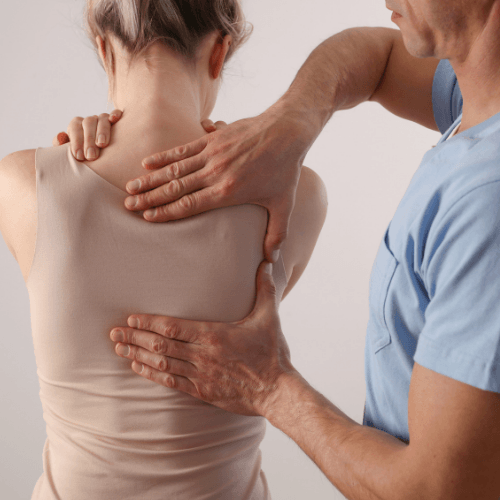
What is true spinal scoliosis?
True spinal scoliosis is a three-dimensional deformity involving lateral curvature and rotation of the spine rather than simply poor posture or a temporary sideways bend. The term originates from the Greek word scolios, meaning crooked or curved.
Standing spinal X-rays can be used to identify the location and pattern of a curve and measure its severity using the Cobb angle. A common presentation is a right-sided thoracic curve, which may produce visible trunk rotation or prominence of the shoulder blade. Some people develop an additional compensatory curve, resulting in an S-shaped spinal pattern.
What are the different types of scoliosis?
Scoliosis is classified according to its cause and the age at which it develops. Idiopathic scoliosis has no identifiable underlying cause and represents the majority of cases. Congenital scoliosis results from abnormalities in vertebral development before birth, while neuromuscular scoliosis can occur in association with conditions affecting the muscles or nervous system.
Idiopathic scoliosis can be further categorized according to age of onset, including infantile, juvenile, and adolescent idiopathic scoliosis. AIS develops during adolescence and is the most common form. Identifying the type is important because age, remaining growth, underlying cause, and curve characteristics can influence the likelihood of progression and the appropriate management strategy.
How is scoliosis managed?
Scoliosis management depends primarily on a person’s age, skeletal maturity, curve magnitude, curve pattern, symptoms, and risk of progression. Smaller curves may only require observation and periodic clinical or radiographic monitoring, particularly while a child or adolescent is still growing.
Conservative management may include scoliosis-specific or rehabilitative exercise, physical activity, and appropriate manual care to address symptoms and support function. Exercise may help with strength, mobility, posture, and physical conditioning, but recommendations should be individualized according to the characteristics of the curve.
For growing patients with moderate curves at greater risk of progression, bracing may be recommended to help limit further curvature. Larger or progressively worsening curves may require evaluation by a spine or orthopedic specialist to determine whether surgical treatment should be considered. The appropriate approach can therefore range from observation and conservative care to bracing or specialist management.
Can you exercise and play sports with scoliosis?
Most people with scoliosis can exercise and participate in sports unless a healthcare professional has recommended specific restrictions. Physical activity generally does not need to stop simply because a spinal curve has been diagnosed.
Remaining active can support strength, cardiovascular fitness, coordination, mobility, and overall well-being. For someone experiencing discomfort or functional limitations, an individualized exercise program can also be adapted to their abilities and curve characteristics. Children and teenagers with scoliosis should be encouraged to remain engaged in appropriate activities while following any monitoring or treatment recommendations from their healthcare team.
At Cole Pain Therapy Group, our doctors evaluate spinal mobility, posture, muscular function, symptoms, and activity limitations to determine how conservative care may fit into scoliosis management. When appropriate, chiropractic care and individualized therapeutic exercise can be used to address musculoskeletal discomfort and support comfortable movement and function. Because managing scoliosis also depends on factors such as curve magnitude, skeletal maturity, and progression, we can help patients and families recognize when continued imaging, bracing, or evaluation by an orthopedic or spine specialist should be part of their care.
Related Reads
- Therapeutic Exercise: Strengthening, Flexibility, and Pain Relief for Better Mobility
- Prehabilitation and Rehabilitation: Addressing Predisposing Factors for Better Health
- What You Need to Know About Spinal Manipulation: How It Relieves Pain and Restores Movement
- How to Choose the Right Exercise for You
NEW PATIENTS
Step 1
Call today to schedule your convenient appointment.
Step 2
Pre-register your important health information on your phone or computer to save time.
Step 3
Meet your new doctor for a customized plan and start moving toward your goal!
Discover how we may help!
We are the Memphis area’s top-rated chiropractic group, providing you with gentle chiropractic care, dry needle therapy, exercise therapy, and therapeutic massage.

2845 Summer Oaks Dr, Memphis, TN 38134
(901) 377-2340
Life Shouldn't Hurt!
You Deserve To Feel Great. We Can Help!
Your go-to Chiropractor in Memphis, TN

Richard L. Cole, DC, DACNB, DAIPM, FIACN, FICC
Jeffrey D. Luebbe, DC, CCRD, CCSP
W. Steven Vollmer, DC, DAAPM
Bradford J. Cole, DC, MS, CSCS
J. Colby Poston, DC
Daniel H. Smith, DC
2845 Summer Oaks Dr., Memphis, TN 38134
(901) 377-2340
Monday – Friday:
8:00 AM – 6:00 PM
Saturday :
8:00 AM – 12:00 PM
Walk-ins are Welcome!
© 2025 Cole Pain Therapy Group, All Rights Reserved