What You Need to Know About Cervicogenic Headaches and How to Find Relief
Cervicogenic headaches are a type of secondary headache, meaning the pain originates from a problem in the neck rather than the head itself. Unlike migraines or tension headaches, cervicogenic headaches develop when the joints, muscles, ligaments, discs, or nerves of the cervical spine become irritated or dysfunctional. Because the upper cervical nerves share pain pathways with the head through the trigeminocervical complex, pain is often referred from the neck into the back, side, or front of the head, making this condition one of the most commonly misdiagnosed headache disorders.
Common causes include whiplash injuries, cervical joint dysfunction, degenerative changes, poor posture, forward head posture, muscle imbalances, chronic muscle tension, and cervical disc disorders. Research has also highlighted the role of the myodural bridges, connective tissues that link several muscles at the base of the skull to the protective covering of the spinal cord. Excessive tension within these muscles may increase stress on these tissues, contributing to referred pain and restricted movement in the upper cervical region.
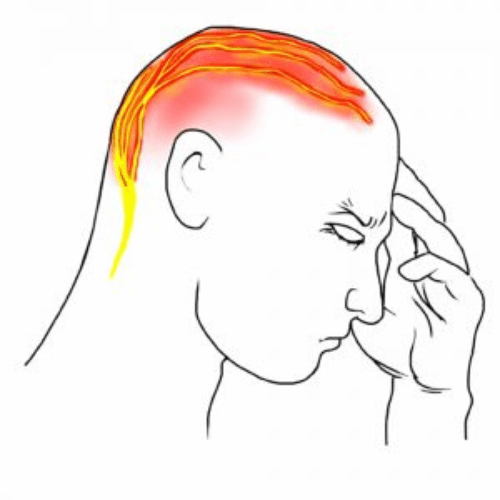
People with cervicogenic headaches often experience one-sided head pain accompanied by neck stiffness, reduced cervical range of motion, and headaches that worsen with certain neck movements or prolonged sitting, computer work, or other sustained postures. Some individuals also develop pain that radiates into the shoulder, upper back, scalp, or around one eye. Because these symptoms frequently resemble migraines and tension headaches, identifying the underlying source of pain is essential for developing an effective treatment plan and reducing the likelihood of future episodes.
What causes cervicogenic headaches?
Cervicogenic headaches occur when pain-sensitive structures in the neck refer pain to the head. These headaches are considered secondary headaches because they originate from dysfunction in the cervical spine rather than the head itself. Identifying the specific source of the neck pain is the first step toward developing an effective treatment plan.
How do you resolve a cervicogenic headache?
The most effective treatment addresses the neck condition causing the headache rather than simply masking the pain. Conservative care may include chiropractic adjustments, manual therapy, therapeutic exercise, dry needling, rehabilitation, postural correction, and heat or cold therapy to improve cervical mobility, reduce muscle tension, restore normal movement, and support long-term recovery. Treating the source of the problem often provides more lasting relief than relying on pain medication alone.
What do cervicogenic headaches feel like?
Cervicogenic headaches usually begin in the neck before spreading into the head. The pain is commonly one-sided and may affect the back of the head, temples, forehead, or around one eye. Many people also experience neck stiffness, reduced range of motion, tenderness near the base of the skull, and headaches that worsen with neck movement or prolonged sitting. Pain may also radiate into the shoulder or upper arm.
What is the red flag for cervicogenic headaches?
Most cervicogenic headaches are not medical emergencies, but certain symptoms require immediate evaluation. Seek emergency medical care if your headache develops suddenly and severely, follows significant trauma, or is accompanied by fever, confusion, vision changes, difficulty speaking, seizures, weakness, numbness, loss of coordination, or loss of bowel or bladder control. These symptoms may indicate a serious neurological or medical condition requiring urgent treatment.
At Cole Pain Therapy Group, our doctors of chiropractic perform a comprehensive evaluation to determine whether your headaches originate from the cervical spine and identify the underlying cause of your symptoms. Based on your diagnosis, your personalized treatment plan may include chiropractic adjustments, manual therapy, therapeutic exercise, dry needling, rehabilitation, postural correction, and heat or cold therapy to reduce pain, improve neck mobility, restore normal movement, and help decrease the frequency and intensity of cervicogenic headaches so you can return to your daily activities with greater comfort and confidence.
Related Reads
NEW PATIENTS
Step 1
Call today to schedule your convenient appointment.
Step 2
Pre-register your important health information on your phone or computer to save time.
Step 3
Meet your new doctor for a customized plan and start moving toward your goal!
Discover how we may help!
We are the Memphis area’s top-rated chiropractic group, providing you with gentle chiropractic care, dry needle therapy, exercise therapy, and therapeutic massage.

2845 Summer Oaks Dr, Memphis, TN 38134
(901) 377-2340
Life Shouldn't Hurt!
You Deserve To Feel Great. We Can Help!
Your go-to Chiropractor in Memphis, TN

Richard L. Cole, DC, DACNB, DAIPM, FIACN, FICC
Jeffrey D. Luebbe, DC, CCRD, CCSP
W. Steven Vollmer, DC, DAAPM
Bradford J. Cole, DC, MS, CSCS
J. Colby Poston, DC
Daniel H. Smith, DC
2845 Summer Oaks Dr., Memphis, TN 38134
(901) 377-2340
Monday – Friday:
8:00 AM – 6:00 PM
Saturday :
8:00 AM – 12:00 PM
Walk-ins are Welcome!
© 2025 Cole Pain Therapy Group, All Rights Reserved