How To Manage Osgood-Schlatter Disease In Adolescent Athletes
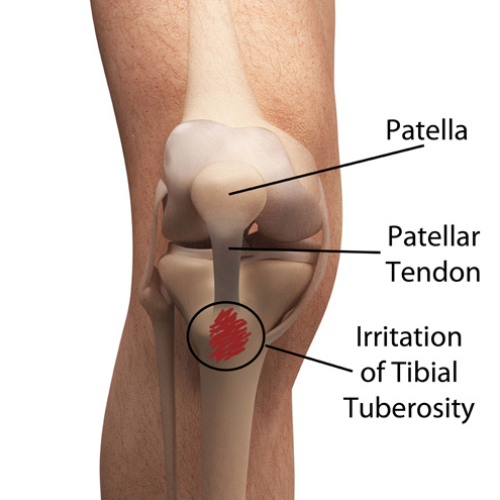
Osgood-Schlatter Disease (OSD) is a common condition in young athletes, especially those who play sports involving running, jumping, or sudden movements, such as soccer, basketball, and gymnastics. It causes pain and swelling just below the knee at the tibial tuberosity, where the patellar tendon attaches to the bone. It typically occurs during growth spurts when bones, muscles, and tendons are developing quickly.
What Causes Osgood-Schlatter Disease?
OSD is caused by repetitive stress on the growing bones, particularly at the point where the patellar tendon attaches to the tibia (shinbone). The condition arises when the muscles around the knee, such as the quadriceps and hamstrings, aren’t flexible enough to handle the increasing strain, leading to inflammation and pain at the tibial tuberosity.
Who is at Risk?
Adolescent athletes between the ages of 10 and 15 are most affected.
Boys and girls are equally affected, but it’s more common in those who play sports like running, soccer, or basketball.
Previous injuries or a family history of OSD can increase the risk.
Athletes with Leg Length Discrepancy or poor mechanics (like patellar tracking issues) may also be more prone to OSD.
Common Symptoms of Osgood-Schlatter Disease
Pain just below the knee, usually at the tibial tuberosity.
Swelling and tenderness at the site.
Pain that worsens with activity, especially running, jumping, or squatting.
Stiffness or discomfort when bending the knee fully.
Reduced range of motion in the knee.
How to Manage Osgood-Schlatter Disease
If you or your child is dealing with OSD, it’s important to manage symptoms to promote healing while allowing for a safe return to sports and activities. Here are some key steps:
Rest and Modify Activity
Reducing the intensity of activities that put pressure on the knee is critical. This could mean resting from high-impact sports like running or jumping.
Consider cross-training activities such as swimming or stationary cycling to stay active without stressing the knee.
Ice and Anti-Inflammatory Medications
Applying ice to the affected area can help reduce pain and swelling.
Nonsteroidal anti-inflammatory drugs (NSAIDs) like ibuprofen can also reduce inflammation and provide relief.
Stretching and Strengthening
Stretching exercises for the quadriceps, hamstrings, and calves can improve flexibility and help ease tension on the knee.
Strengthening the hamstrings and hip muscles is important to correct any imbalances that may contribute to the condition.
Use of Knee Braces or Supports
A patellar tendon strap or brace can help alleviate pressure on the tibial tuberosity, allowing the athlete to remain active with reduced pain.
Physical Therapy
A physical therapist can provide tailored exercises to improve knee mechanics, enhance flexibility, and strengthen muscles that support the knee.
Therapy may also focus on improving overall leg strength and balance, which can prevent further injury.
Return to Sport
Athletes should only return to high-impact activities once pain-free and after completing a structured rehabilitation program.
A graded return-to-play protocol is essential. This involves gradually increasing intensity and monitoring for any return of symptoms.
When to Seek Professional Help
While most cases of OSD can be managed with rest and physical therapy, if symptoms persist or worsen, it’s important to consult a healthcare professional. An X-ray or MRI may be recommended if there’s suspicion of a fracture or if symptoms don’t improve with conservative treatment.
With proper management, most athletes with Osgood-Schlatter Disease recover fully and return to their sports pain-free. The key is to balance rest with activity, focus on stretching and strengthening exercises, and follow a gradual return-to-play program. Remember, it’s important to listen to your body and avoid pushing through the pain to prevent long-term issues.
NEW PATIENTS
Step 1
Call today to schedule your convenient appointment.
Step 2
Pre-register your important health information on your phone or computer to save time.
Step 3
Meet your new doctor for a customized plan and start moving toward your goal!
Discover how we may help!
We are the Memphis area’s top-rated chiropractic group, providing you with gentle chiropractic care, dry needle therapy, exercise therapy, and therapeutic massage.

2845 Summer Oaks Dr, Memphis, TN 38134
(901) 377-2340
Life Shouldn't Hurt!
You Deserve To Feel Great. We Can Help!
Your go-to Chiropractor in Memphis, TN

Richard L. Cole, DC, DACNB, DAIPM, FIACN, FICC
Jeffrey D. Luebbe, DC, CCRD, CCSP
W. Steven Vollmer, DC, DAAPM
Bradford J. Cole, DC, MS, CSCS
J. Colby Poston, DC
Daniel H. Smith, DC
2845 Summer Oaks Dr., Memphis, TN 38134
(901) 377-2340
Monday – Friday:
8:00 AM – 6:00 PM
Saturday :
8:00 AM – 12:00 PM
Walk-ins are Welcome!
© 2025 Cole Pain Therapy Group, All Rights Reserved