How To Overcome Pronator Teres Syndrome And Relieve Forearm Pain
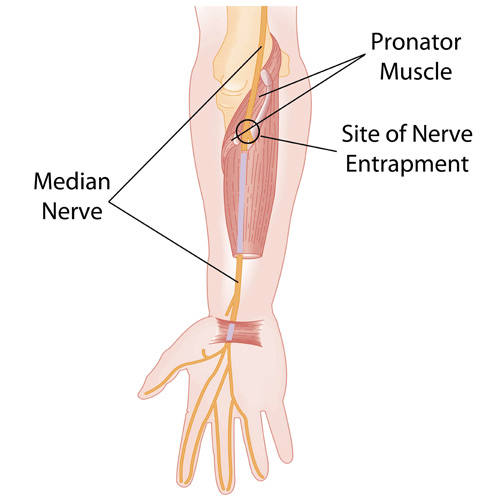
Pronator Teres Syndrome (PTS) happens when the median nerve in your forearm gets squeezed by a muscle near the elbow called the pronator teres. This nerve controls much of your grip strength and sensation in your hand. When it’s irritated, you may feel pain, tingling, or weakness in your forearm, wrist, or hand.
It is less common than carpal tunnel syndrome, but the symptoms can feel similar. One key difference is that pronator teres syndrome does not usually cause nighttime pain, while carpal tunnel often wakes people up at night.
Why Does It Happen?
PTS is usually linked to repetitive activities that involve twisting the forearm or gripping with the palm facing down.
You may be at higher risk if you:
Work with your hands a lot (carpenters, mechanics, assembly-line workers)
Play sports like tennis, rowing, or weightlifting
Have strong or overdeveloped forearm muscles
Live with conditions like diabetes or thyroid problems
It also tends to be more common in women and often affects the dominant arm. Like other neurological conditions, irritation of this nerve can overlap with issues in the neck or shoulder, such as Whiplash Neck Injuries, Thoracic Segmental Joint Dysfunction, or even Frozen Shoulder (Adhesive Capsulitis).
Common Symptoms
The signs of pronator teres syndrome can feel a lot like carpal tunnel, but there are a few important differences.
You may notice:
Aching pain in the front of the forearm
Tingling or numbness in the thumb, index, middle, and half of the ring finger
Grip weakness or clumsiness with fine tasks (like pinching or buttoning)
Pain that worsens with repeated twisting or gripping
No nighttime flare-ups (a key clue that it’s not carpal tunnel)
Some patients describe it as a dull headache-like ache in the forearm that spreads into the hand.
How Doctors Diagnose It
Your provider will start with a hands-on exam. They may:
Press on the pronator teres muscle to see if it reproduces symptoms
Ask you to turn your palm down against resistance
Check if standard wrist tests (used for carpal tunnel) are negative
Look for grip weakness or clumsiness
Sometimes, other conditions like Axillary Neuropathy, De Quervain’s Tenosynovitis, or even Tarsal Tunnel Syndrome in the ankle can mimic nerve entrapments, so it’s important to get a careful evaluation.
Treatment Options
The good news: Most people improve with conservative care. Surgery is rarely needed unless the condition is severe and ongoing.
Non-Surgical Care
Rest and activity changes – Avoid repetitive twisting or heavy gripping.
Workstation check – Adjust your setup to reduce strain (similar to preventing issues like Leg Length Discrepancy problems in posture).
Ice or therapy – Ice massage, ultrasound, or gentle electrical stimulation can calm irritation.
Stretching and soft tissue therapy – Helps relax tight forearm muscles and reduce pressure on the nerve.
Nerve gliding exercises – Gentle guided movements to restore healthy nerve motion.
Splinting – A short-term elbow brace can sometimes help the tendon and nerve rest.
When Surgery Is Considered
If symptoms don’t improve after months of care, surgery to release the nerve may be discussed. Thankfully, most patients improve without needing this step.
With proper care, many patients feel better within a few months. Early treatment is key — if you ignore symptoms, weakness and clumsiness may stick around longer.
At Cole Pain Therapy Group, we help patients recover through a personalized plan that focuses on:
Reducing pain
Restoring strength and mobility
Preventing future flare-ups
NEW PATIENTS
Step 1
Call today to schedule your convenient appointment.
Step 2
Pre-register your important health information on your phone or computer to save time.
Step 3
Meet your new doctor for a customized plan and start moving toward your goal!
Discover how we may help!
We are the Memphis area’s top-rated chiropractic group, providing you with gentle chiropractic care, dry needle therapy, exercise therapy, and therapeutic massage.

2845 Summer Oaks Dr, Memphis, TN 38134
(901) 377-2340
Life Shouldn't Hurt!
You Deserve To Feel Great. We Can Help!
Your go-to Chiropractor in Memphis, TN

Richard L. Cole, DC, DACNB, DAIPM, FIACN, FICC
Jeffrey D. Luebbe, DC, CCRD, CCSP
W. Steven Vollmer, DC, DAAPM
Bradford J. Cole, DC, MS, CSCS
J. Colby Poston, DC
Daniel H. Smith, DC
2845 Summer Oaks Dr., Memphis, TN 38134
(901) 377-2340
Monday – Friday:
8:00 AM – 6:00 PM
Saturday :
8:00 AM – 12:00 PM
Walk-ins are Welcome!
© 2025 Cole Pain Therapy Group, All Rights Reserved