How To Overcome Posterior Shoulder Impingement Syndrome
Posterior shoulder impingement syndrome is a condition that most often affects people who perform repetitive overhead movements such as throwing, serving, swimming, or lifting. It develops when structures in the back of the shoulder are repeatedly compressed during specific arm positions, leading to pain, stiffness, loss of motion, and reduced performance.
At Cole Pain Therapy Group, we help patients throughout Memphis, Bartlett, Germantown, Collierville, and surrounding areas identify the mechanical causes of shoulder pain and restore healthy movement through conservative, hands on care that addresses the root problem rather than masking symptoms.
What Is Posterior Shoulder Impingement Syndrome?
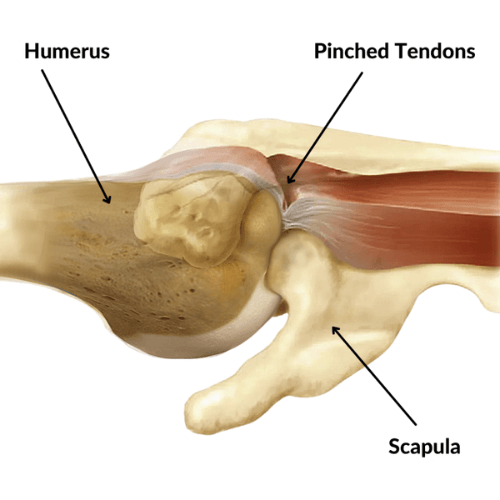
Posterior shoulder impingement occurs when the back portion of the rotator cuff and surrounding soft tissues are compressed between the head of the humerus and the back of the shoulder socket (glenoid). This compression most commonly happens when the arm is elevated and externally rotated, a position frequently used in throwing, serving, and overhead lifting.
Over time, repeated compression can irritate:
The posterior rotator cuff
The shoulder capsule
The labrum
Surrounding soft tissues
Unlike more common anterior shoulder impingement, pain in posterior impingement is typically felt deep in the back of the shoulder rather than the front.
Common Symptoms of Posterior Shoulder Impingement
Symptoms often develop gradually and are closely tied to activity. Common signs include:
Deep, aching pain in the back of the shoulder
Pain during throwing, serving, or overhead lifting
Loss of shoulder internal rotation
Shoulder stiffness after activity
Reduced strength or endurance with overhead use
Pain that worsens late in workouts, games, or training sessions
Symptoms may temporarily improve with rest but often return once activity resumes if underlying mechanics are not corrected.
How Do You Fix Posterior Shoulder Impingement?
Fixing posterior shoulder impingement requires more than rest alone. Effective treatment focuses on correcting the movement patterns and restrictions that cause repeated tissue compression.
Conservative care typically includes:
Restoring shoulder and scapular mobility
Improving internal rotation range of motion
Strengthening the rotator cuff in balanced positions
Improving scapular control and shoulder stability
Gradually reintroducing overhead activity with better mechanics
Simply avoiding activity without addressing these factors often leads to recurring pain.
How Is Posterior Shoulder Impingement Treated?
Treatment usually involves a combination of hands on care and targeted rehabilitation. Most patients improve without surgery when treatment begins early.
Common elements include:
Manual therapy to improve joint mobility and tissue flexibility
Posterior shoulder stretching and capsule mobility work
Rotator cuff and scapular strengthening
Load management and activity modification
Gradual return to sport or overhead work
Managing training volume and movement efficiency is essential for long term recovery.
What Are the Symptoms of Shoulder Impingement?
General shoulder impingement symptoms include pain with overhead use, stiffness, loss of motion, and discomfort that increases with repetitive activity. In posterior shoulder impingement specifically, pain is more commonly felt deep in the back of the shoulder rather than the front.
How Long Does Posterior Shoulder Impingement Take To Heal?
Recovery time varies depending on severity, activity demands, and how early treatment begins.
Mild cases may improve within several weeks
More persistent or chronic cases may take several months
Long standing symptoms often require gradual progression and consistent rehab
Addressing motion loss and strength deficits early helps shorten recovery time and reduce recurrence.
What Causes Posterior Shoulder Impingement?
Posterior shoulder impingement usually develops from a combination of factors rather than a single injury. Common contributors include:
Loss of shoulder internal rotation
Tight posterior shoulder capsule
Scapular control deficits
Rotator cuff muscle imbalance
High volume overhead activity
Poor coordination through the trunk and hips
Issues in the lower body or core can increase stress on the shoulder during throwing or overhead movement, making full body assessment important.
How Posterior Shoulder Impingement Is Evaluated
A proper evaluation looks beyond the shoulder alone. At Cole Pain Therapy Group, assessment may include:
Shoulder range of motion testing
Internal rotation measurements
Scapular movement analysis
Rotator cuff strength testing
Functional movement assessment
Imaging is not always necessary unless symptoms persist or structural injury is suspected.
Conservative Treatment Options
Manual Therapy
Hands on care helps restore shoulder mobility, reduce tissue restriction, and improve joint mechanics.
Mobility and Stretching
Targeted mobility work restores internal rotation and reduces compression during overhead movements.
Strength and Stability Training
Rehabilitation focuses on balanced rotator cuff strength, scapular control, and coordinated movement throughout the kinetic chain.
Activity and Load Management
Adjusting training volume, throwing mechanics, and recovery strategies allows healing while maintaining function.
At Cole Pain Therapy Group, we focus on identifying why posterior shoulder impingement developed and correcting the underlying movement issues that caused it. Our team works with active individuals and athletes throughout Memphis, Bartlett, Germantown, Collierville, and nearby communities to restore shoulder health and confidence without unnecessary procedures.
If shoulder pain has been limiting your activity or performance, conservative care may help you move better and return to what you enjoy with less pain.
Related Reads
NEW PATIENTS
Step 1
Call today to schedule your convenient appointment.
Step 2
Pre-register your important health information on your phone or computer to save time.
Step 3
Meet your new doctor for a customized plan and start moving toward your goal!
Discover how we may help!
We are the Memphis area’s top-rated chiropractic group, providing you with gentle chiropractic care, dry needle therapy, exercise therapy, and therapeutic massage.

2845 Summer Oaks Dr, Memphis, TN 38134
(901) 377-2340
Life Shouldn't Hurt!
You Deserve To Feel Great. We Can Help!
Your go-to Chiropractor in Memphis, TN

Richard L. Cole, DC, DACNB, DAIPM, FIACN, FICC
Jeffrey D. Luebbe, DC, CCRD, CCSP
W. Steven Vollmer, DC, DAAPM
Bradford J. Cole, DC, MS, CSCS
J. Colby Poston, DC
Daniel H. Smith, DC
2845 Summer Oaks Dr., Memphis, TN 38134
(901) 377-2340
Monday – Friday:
8:00 AM – 6:00 PM
Saturday :
8:00 AM – 12:00 PM
Walk-ins are Welcome!
© 2025 Cole Pain Therapy Group, All Rights Reserved