What You Need to Know About A.C. Joint Sprain: Causes and Solutions
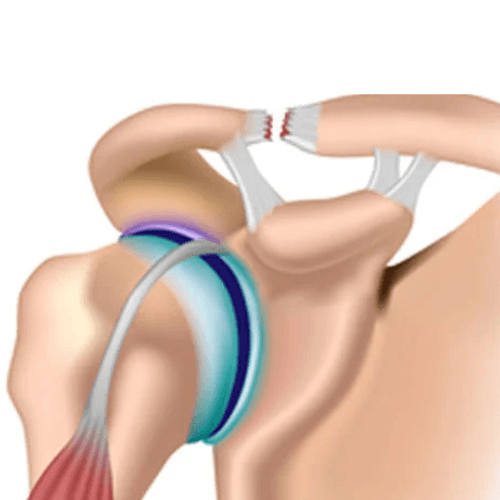
An A.C. joint sprain occurs when the ligaments supporting the acromioclavicular joint at the top of the shoulder are stretched or torn. These ligaments stabilize the connection between the acromion of the shoulder blade and the clavicle (collarbone). Also known as a shoulder separation, the injury can range from a mild sprain to a complete disruption of the structures supporting the joint.
A.C. joint injuries account for approximately 40% to 50% of athletic shoulder injuries and are especially common among adolescents and young adults involved in contact sports such as football and hockey. They typically occur after a direct fall onto the shoulder or force transmitted through an outstretched arm, resulting in pain, swelling, and difficulty moving the shoulder.
A shoulder separation is different from a shoulder dislocation. An A.C. joint sprain affects the connection between the collarbone and shoulder blade, while a shoulder dislocation occurs when the upper arm bone moves out of the main shoulder joint. With an A.C. sprain, the amount of ligament damage and joint displacement determines the grade of the injury and helps guide treatment and recovery.
How are separated shoulder injuries classified?
Separated shoulder injuries are classified from Grade 1 through Grade 6 based on the extent of ligament damage and displacement at the A.C. joint. Grade 1 typically involves a mild sprain without significant separation, while Grade 2 involves greater ligament injury and slight displacement. Grade 3 and higher injuries involve progressively greater disruption of the supporting structures and changes in joint position. More severe separations may create a visible prominence near the end of the collarbone, sometimes called a “step deformity.”
What causes a separated shoulder?
A separated shoulder is most commonly caused by a direct fall or impact onto the point of the shoulder. This force can push the shoulder girdle downward relative to the collarbone and damage the ligaments stabilizing the A.C. joint. The injury may also occur after falling onto an outstretched hand, which transmits force through the arm and shoulder. Contact sports, cycling accidents, and other activities involving falls or direct shoulder impacts can increase the risk.
What are the symptoms of a separated shoulder?
Common symptoms of a separated shoulder include pain, tenderness, and swelling at the top of the shoulder, along with painful or limited arm movement. Reaching overhead or across the body may be particularly uncomfortable. More significant A.C. joint injuries can cause bruising and a noticeable bump near the end of the collarbone as the normal alignment of the joint changes.
How is an acromioclavicular sprain treated?
Treatment for an acromioclavicular sprain depends on the grade of the injury, the amount of joint displacement, and the patient’s symptoms and functional limitations. Grade 1, Grade 2, and many Grade 3 injuries can be managed conservatively with temporary activity modification, a sling when needed for comfort, and progressive rehabilitation to restore shoulder mobility, strength, and stability. Ice may help manage pain and swelling during the early stage. Mild injuries can improve within a few weeks, while more significant separations may require several weeks or longer to recover. Higher-grade injuries or substantial instability may require orthopedic evaluation to determine whether surgical treatment is appropriate.
At Cole Pain Therapy Group, our doctors evaluate A.C. joint injuries by looking at the location of your shoulder pain, joint tenderness, range of motion, strength, and how the injury is affecting everyday activities. When conservative care is appropriate, individualized therapeutic exercise, rehabilitation, activity modification, and other musculoskeletal treatments can help restore shoulder function and support a gradual return to work, sports, or normal activity. If the injury involves significant separation or instability, we can help identify when orthopedic evaluation should be considered.
Related Reads
NEW PATIENTS
Step 1
Call today to schedule your convenient appointment.
Step 2
Pre-register your important health information on your phone or computer to save time.
Step 3
Meet your new doctor for a customized plan and start moving toward your goal!
Discover how we may help!
We are the Memphis area’s top-rated chiropractic group, providing you with gentle chiropractic care, dry needle therapy, exercise therapy, and therapeutic massage.

2845 Summer Oaks Dr, Memphis, TN 38134
(901) 377-2340
Life Shouldn't Hurt!
You Deserve To Feel Great. We Can Help!
Your go-to Chiropractor in Memphis, TN

Richard L. Cole, DC, DACNB, DAIPM, FIACN, FICC
Jeffrey D. Luebbe, DC, CCRD, CCSP
W. Steven Vollmer, DC, DAAPM
Bradford J. Cole, DC, MS, CSCS
J. Colby Poston, DC
Daniel H. Smith, DC
2845 Summer Oaks Dr., Memphis, TN 38134
(901) 377-2340
Monday – Friday:
8:00 AM – 6:00 PM
Saturday :
8:00 AM – 12:00 PM
Walk-ins are Welcome!
© 2025 Cole Pain Therapy Group, All Rights Reserved