Everything You Need to Know About Dry Needling: Benefits and Treatment
Dry needling is a conservative treatment that uses a thin, solid needle to target myofascial trigger points and dysfunctional muscle tissue. It is commonly used for neuromusculoskeletal conditions involving muscle pain, tightness, restricted range of motion, and impaired movement. You may also hear the treatment referred to as functional dry needling (FDN), trigger point dry needling, or intramuscular stimulation.
The development of dry needling grew from early research into tender muscles and their characteristic patterns of referred pain. During the early 1900s, clinicians began documenting how sensitive areas within muscles could contribute to orthopedic problems, and by the 1930s and 1940s, researchers were describing recognizable pain referral patterns associated with muscular trigger points. Dr. Karel Lewit later demonstrated that inserting a needle without medication could itself produce a therapeutic response, helping distinguish “dry” needling from “wet” injections that deliver medication.
Modern dry needling focuses on finding muscles and trigger points that may be contributing to a patient’s symptoms. During treatment, a very thin needle is inserted into the targeted tissue. Stimulating a trigger point may produce a brief local twitch response, which can help decrease muscle tightness and improve how the muscle functions. Because trigger points can produce referred pain, the muscle responsible for a problem is not always located where discomfort is actually felt.
Dry needling is typically used as part of a broader rehabilitation plan rather than as a stand-alone solution. When appropriate, it can be combined with therapeutic exercise, chiropractic care, mobility work, and rehabilitation to address both painful muscle tissue and the movement dysfunction contributing to the problem.
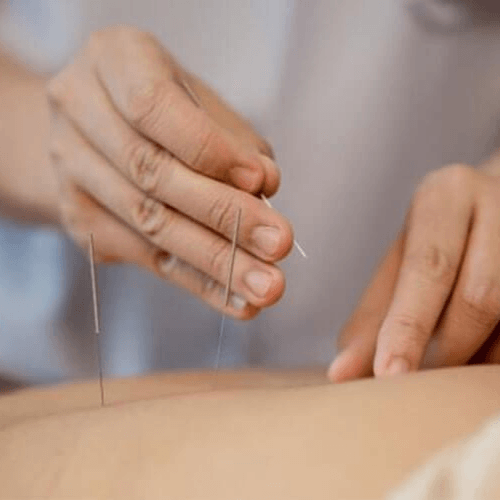
Is dry needling like acupuncture?
Dry needling and acupuncture both use thin needles, but they differ in their clinical approach, assessment, and treatment goals. Dry needling is commonly used to target myofascial trigger points and dysfunctional muscles associated with pain or limited movement. Acupuncture developed from a different clinical framework and may use different treatment locations and techniques.
A healthcare provider using dry needling selects the muscles to treat based on the patient’s examination, symptoms, movement limitations, and suspected neuromusculoskeletal dysfunction.
Is dry needling safe?
Dry needling is generally considered safe when performed by a properly trained healthcare professional. Common temporary effects may include soreness, minor bruising, fatigue, or brief discomfort during treatment.
Dry needling may not be appropriate for everyone. People who are pregnant or have a bleeding disorder, vascular condition, significant needle phobia, metal allergy, or another relevant medical concern should discuss their health history with their provider before treatment. A proper evaluation helps determine whether the procedure is appropriate for the individual patient.
What can be treated with dry needling?
Dry needling may be used for a variety of musculoskeletal problems when trigger points or muscle dysfunction contribute to the symptoms. This can include certain cases of headaches, neck pain, back pain, shoulder pain, arm pain, hip pain, knee pain, and leg pain.
The painful area does not always reveal which muscle is responsible. For example, a trigger point in one muscle may produce discomfort somewhere else through referred pain. This is why examination of muscle function and movement is important before deciding where—or whether—dry needling should be performed.
At Cole Pain Therapy Group, our doctors evaluate your pain, movement, and muscle function to determine whether dry needling is appropriate and identify the specific trigger points or dysfunctional muscles contributing to your symptoms. When indicated, dry needling can be incorporated into your personalized treatment plan to reduce muscle tension, improve mobility, relieve pain, and support better movement as you progress through rehabilitation.
Related Reads
NEW PATIENTS
Step 1
Call today to schedule your convenient appointment.
Step 2
Pre-register your important health information on your phone or computer to save time.
Step 3
Meet your new doctor for a customized plan and start moving toward your goal!
Discover how we may help!
We are the Memphis area’s top-rated chiropractic group, providing you with gentle chiropractic care, dry needle therapy, exercise therapy, and therapeutic massage.

2845 Summer Oaks Dr, Memphis, TN 38134
(901) 377-2340
Life Shouldn't Hurt!
You Deserve To Feel Great. We Can Help!
Your go-to Chiropractor in Memphis, TN

Richard L. Cole, DC, DACNB, DAIPM, FIACN, FICC
Jeffrey D. Luebbe, DC, CCRD, CCSP
W. Steven Vollmer, DC, DAAPM
Bradford J. Cole, DC, MS, CSCS
J. Colby Poston, DC
Daniel H. Smith, DC
2845 Summer Oaks Dr., Memphis, TN 38134
(901) 377-2340
Monday – Friday:
8:00 AM – 6:00 PM
Saturday :
8:00 AM – 12:00 PM
Walk-ins are Welcome!
© 2025 Cole Pain Therapy Group, All Rights Reserved