Understanding Sinus Tarsi Pain And How To Restore Ankle Stability
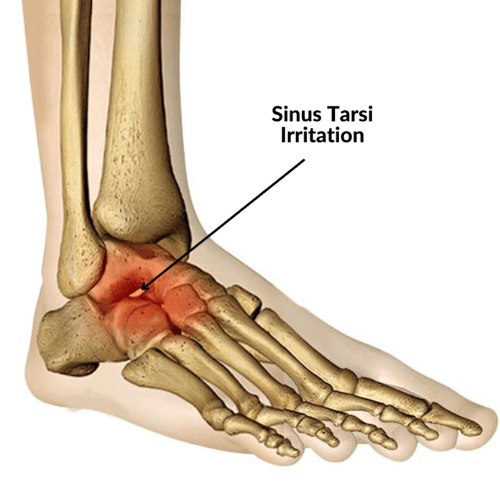
Sinus tarsi syndrome is a condition that affects the small anatomical space on the outside of the ankle between the talus and calcaneus bones. This region plays a critical role in subtalar joint stability, balance, and proprioception, helping the foot adapt to uneven surfaces during walking and movement.
When the sinus tarsi becomes irritated or unstable, individuals may experience persistent lateral ankle pain, weakness, swelling, or a sense that the ankle feels unstable or cannot be trusted, especially during weight-bearing activities. Symptoms often worsen with walking on uneven ground, standing for long periods, or athletic activity.
At Cole Pain Therapy Group, sinus tarsi pain is commonly seen in people with a history of ankle sprains, repetitive overuse, poor foot and ankle control, or unresolved instability. Accurate diagnosis and targeted rehabilitation are essential to restoring ankle stability and preventing long-term dysfunction.
How Do you Treat Sinus Tarsi Syndrome?
Treatment for sinus tarsi syndrome focuses on reducing irritation within the sinus tarsi while restoring subtalar joint control and ankle stability. Many cases respond well to conservative care when the underlying movement and stability deficits are properly addressed.
Common components of care include:
Reducing excessive subtalar joint motion that places stress on the sinus tarsi
Improving foot and ankle strength, particularly the peroneal muscles
Restoring proprioception and balance to improve joint control
Addressing scar tissue or soft tissue restrictions from prior ankle sprains
Correcting gait and loading mechanics that continue to irritate the joint
Hands-on therapy may be used initially to calm irritated tissue and improve joint mobility. Rehabilitation exercises are then progressively introduced to rebuild strength, stability, and confidence so the ankle can tolerate daily activities and higher-level demands safely.
Is Walking Bad for Sinus Tarsi Syndrome?
Walking is not automatically harmful for sinus tarsi syndrome, but tolerance depends on how well the ankle controls motion, particularly at the subtalar joint.
If the foot collapses excessively or lacks stability during walking, symptoms may worsen. Many individuals report increased pain when walking on uneven surfaces, hills, or for longer distances, as these conditions place higher demands on subtalar joint control.
With proper support, activity modification, and structured rehabilitation, walking is usually encouraged and gradually progressed rather than avoided, helping restore function without perpetuating irritation.
How Long Does it Take for Sinus Tarsi to Heal?
Recovery timelines vary depending on severity, duration of symptoms, and the presence of instability.
Mild cases may improve within several weeks
Chronic or instability-related cases often require several months of structured care
Long-standing symptoms following repeated ankle sprains typically take longer to resolve
Consistent rehabilitation that addresses both pain and movement control leads to better outcomes than rest alone and reduces the risk of recurrence.
What Happens if Sinus Tarsi Syndrome Goes Untreated?
If left untreated, sinus tarsi syndrome can become a chronic source of ankle pain and instability, affecting overall movement and confidence.
Potential consequences include:
Persistent lateral ankle pain and swelling
Recurrent ankle sprains
Progressive subtalar joint instability
Reduced confidence with walking or athletic activity
Increased stress on the knee, hip, or lower back due to compensation
Early intervention helps prevent these downstream effects and supports long-term ankle health and mobility.
At Cole Pain Therapy Group, care begins with a detailed evaluation of ankle mechanics, subtalar stability, and movement patterns to identify why the sinus tarsi became irritated—not just where pain is felt.
Treatment plans may include manual therapy, targeted strengthening, balance and proprioceptive training, and movement retraining to restore ankle stability and reduce reinjury risk. Patients from Memphis, Bartlett, Lakeland, and Arlington choose Cole Pain Therapy Group for personalized care that supports confident movement and long-term recovery.
Related Reads
NEW PATIENTS
Step 1
Call today to schedule your convenient appointment.
Step 2
Pre-register your important health information on your phone or computer to save time.
Step 3
Meet your new doctor for a customized plan and start moving toward your goal!
Discover how we may help!
We are the Memphis area’s top-rated chiropractic group, providing you with gentle chiropractic care, dry needle therapy, exercise therapy, and therapeutic massage.

2845 Summer Oaks Dr, Memphis, TN 38134
(901) 377-2340
Life Shouldn't Hurt!
You Deserve To Feel Great. We Can Help!
Your go-to Chiropractor in Memphis, TN

Richard L. Cole, DC, DACNB, DAIPM, FIACN, FICC
Jeffrey D. Luebbe, DC, CCRD, CCSP
W. Steven Vollmer, DC, DAAPM
Bradford J. Cole, DC, MS, CSCS
J. Colby Poston, DC
Daniel H. Smith, DC
2845 Summer Oaks Dr., Memphis, TN 38134
(901) 377-2340
Monday – Friday:
8:00 AM – 6:00 PM
Saturday :
8:00 AM – 12:00 PM
Walk-ins are Welcome!
© 2025 Cole Pain Therapy Group, All Rights Reserved