What You Need to Know About Cubital Tunnel Syndrome: Causes, Symptoms, and Solutions
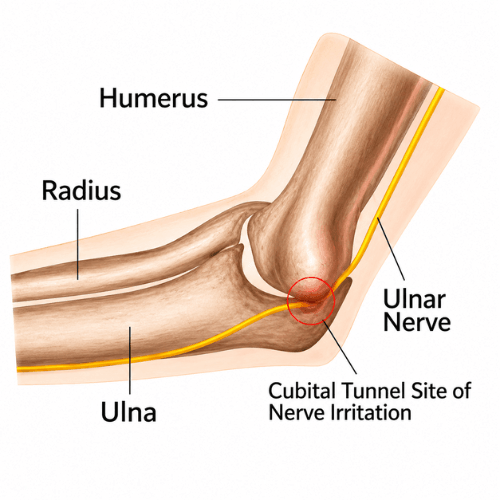
If you’ve noticed numbness or tingling in your ring finger and little finger, especially when your elbow is bent, you may be experiencing cubital tunnel syndrome. This condition develops when the ulnar nerve becomes compressed or irritated as it passes through the cubital tunnel, a narrow passageway located along the inside of the elbow. Because the ulnar nerve controls sensation in part of the hand and helps power several hand muscles, prolonged compression can affect both feeling and grip strength if left untreated.
Unlike sudden injuries, cubital tunnel syndrome usually develops gradually. Repeatedly bending the elbow, resting it on hard surfaces, sleeping with the elbow bent, or performing repetitive work or sports activities can place increasing stress on the ulnar nerve over time. Athletes who participate in throwing sports, racquet sports, or weight training, along with individuals whose jobs require frequent elbow flexion or prolonged computer use, may have a greater risk of developing the condition. Diabetes, previous elbow injuries, and certain anatomical differences can also make the ulnar nerve more vulnerable to compression.
Early treatment is important because nerve irritation can worsen over time. Clinical evidence supports conservative care that focuses on reducing pressure on the ulnar nerve, improving the mobility of surrounding joints and soft tissues, restoring normal movement, and protecting hand function. Many people experience significant improvement without surgery when care begins before permanent nerve damage develops.
How do you treat cubital tunnel syndrome?
Treatment aims to reduce pressure on the ulnar nerve while improving how the arm moves and functions. Depending on your symptoms, treatment may include:
- Soft tissue therapy to reduce muscle tension around the elbow and forearm
- Therapeutic exercises to improve flexibility, strength, and upper-extremity function
- Activity modification and nighttime splinting to reduce prolonged elbow bending
Many people improve with conservative treatment, particularly when symptoms are addressed early.
How long does it take for cubital tunnel syndrome to heal?
Recovery depends on the severity of the nerve irritation and how long symptoms have been present. Mild cases may improve within several weeks, while more persistent cases may require several months of rehabilitation. Following your treatment plan and avoiding activities that repeatedly compress the ulnar nerve can support a smoother recovery.
What is the best exercise for cubital tunnel syndrome?
There isn’t one exercise that’s right for everyone. The most effective rehabilitation program depends on why the ulnar nerve is being irritated. Treatment may include flexibility exercises, strengthening exercises, and nerve mobility exercises that are selected based on your symptoms, examination findings, and activity level.
Should I keep my arm straight with cubital tunnel syndrome?
Keeping the elbow slightly straighter, particularly while sleeping, can reduce pressure on the ulnar nerve. Many people benefit from avoiding prolonged elbow flexion and using a nighttime splint when recommended. During the day, normal movement is encouraged, but positions that consistently reproduce numbness, tingling, or pain should be limited until symptoms improve.
At Cole Pain Therapy Group, our focus is on helping you regain comfortable hand function while preventing ongoing irritation of the ulnar nerve. Treatment is tailored to your symptoms, daily activities, and recovery goals, with an emphasis on reducing stress placed on the nerve during work, exercise, and everyday tasks. Depending on your needs, care may include soft tissue therapy, therapeutic exercise, movement retraining, electrical stimulation, and practical recommendations for activity modification and nighttime positioning. Throughout your recovery, we help you gradually return to normal hand and arm function while providing strategies to reduce the likelihood of recurring symptoms.
Related Reads
NEW PATIENTS
Step 1
Call today to schedule your convenient appointment.
Step 2
Pre-register your important health information on your phone or computer to save time.
Step 3
Meet your new doctor for a customized plan and start moving toward your goal!
Discover how we may help!
We are the Memphis area’s top-rated chiropractic group, providing you with gentle chiropractic care, dry needle therapy, exercise therapy, and therapeutic massage.

2845 Summer Oaks Dr, Memphis, TN 38134
(901) 377-2340
Life Shouldn't Hurt!
You Deserve To Feel Great. We Can Help!
Your go-to Chiropractor in Memphis, TN

Richard L. Cole, DC, DACNB, DAIPM, FIACN, FICC
Jeffrey D. Luebbe, DC, CCRD, CCSP
W. Steven Vollmer, DC, DAAPM
Bradford J. Cole, DC, MS, CSCS
J. Colby Poston, DC
Daniel H. Smith, DC
2845 Summer Oaks Dr., Memphis, TN 38134
(901) 377-2340
Monday – Friday:
8:00 AM – 6:00 PM
Saturday :
8:00 AM – 12:00 PM
Walk-ins are Welcome!
© 2025 Cole Pain Therapy Group, All Rights Reserved