Everything You Need To Know About Lower Crossed Syndrome And Its Impact On Posture

Lower Crossed Syndrome (LCS) is a common condition that affects posture and causes pain, especially in the lower back and pelvis. First described by Vladimir Janda in 1979, this syndrome highlights a predictable pattern of tight and weak muscles, often leading to discomfort and dysfunction. If you’ve been dealing with back pain or hip pain, this condition could be at play. The good news? By understanding its causes and symptoms, you can work towards improving your posture and movement patterns for better overall health.

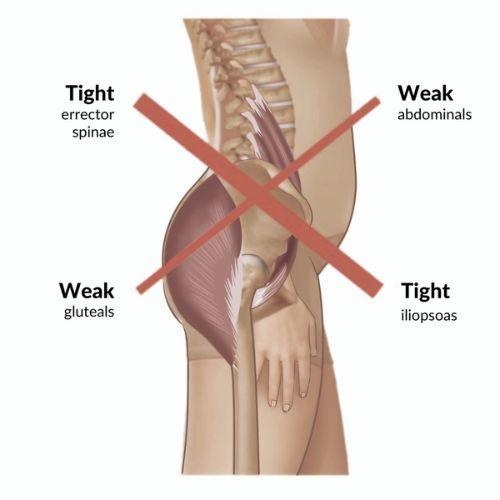
Diagram of lower crossed syndrome illustrating tight and weak muscle groups in the lower back and hip area.

What is Lower Crossed Syndrome?

Lower Crossed Syndrome is a condition that involves muscle imbalances in the lower body, which disrupt proper posture and movement. These imbalances occur when certain muscles become tight and shortened (adaptive shortening), while their opposing muscles become weak and elongated (stretch weakness). Over time, this leads to musculoskeletal dysfunction, which can contribute to pain, joint issues, and movement problems.

The key muscles involved in LCS are categorized as either postural muscles (which become tight) or phasic muscles (which weaken).

  • Postural muscles: Iliopsoas, rectus femoris, and thoracolumbar extensors are commonly tight and prone to shortening.

  • Phasic muscles: Glutes and deep abdominal muscles are more likely to weaken and lose their ability to support the pelvis and spine.

Causes of Lower Crossed Syndrome

Lower Crossed Syndrome is often caused by poor posture, a sedentary lifestyle, and repetitive activities that strain specific muscles. Prolonged sitting, for example, leads to tight hip flexors and weak glutes, both of which are key components of LCS. Poor posture from slouching or sitting improperly for long periods also plays a significant role.

Sports that require repetitive movements, such as Pickleball or weightlifting, can exacerbate LCS by overstressing certain muscle groups while others weaken due to lack of use.

Common Symptoms of Lower Crossed Syndrome

People with Lower Crossed Syndrome often report:

  • Lower back pain: Due to tight lumbar muscles and poor posture.

  • Hip pain: Resulting from tight hip flexors and a lack of glute strength.

  • Weak glutes: Leading to difficulty with stability during walking and other movements.

  • Postural problems: These can include excessive lumbar lordosis (lower back arch) and anterior pelvic tilt.

As the condition worsens, it can lead to more serious issues, including sacroiliac joint dysfunction, greater trochanteric pain syndrome, and iliotibial band syndrome.

How to Identify Lower Crossed Syndrome

Assessing your posture is the first step in identifying Lower Crossed Syndrome. Look for these signs:

  • Anterior pelvic tilt: The pelvis tilts forward, increasing the curve in your lower back.

  • Lumbar hyperlordosis: Excessive curvature in the lower back.

  • Knee hyperextension: The knees may appear locked or stiff.

  • Postural imbalance: Your body may shift sideways, leading to lumbar shift or leg rotation.

Subtypes of Lower Crossed Syndrome

LCS can be classified into two subtypes based on the dominant imbalance:

  1. Subtype A (Hypertonicity): This type involves tight, shortened hip flexors that lead to excessive hip and knee flexion, causing an exaggerated lower back curve (hyperlordosis).

  2. Subtype B (Weakness): This type is characterized by weak abdominal and gluteal muscles, which fail to counteract the stronger hip flexors and back muscles. This leads to flat or hanging glutes, posterior pelvic tilt, knee hyperextension, and poor upper body posture (forward head and rounded shoulders).

How to Test for Lower Crossed Syndrome

There are several ways healthcare professionals assess the condition, including:

  • Visual Postural Assessment: Your posture may show signs of lower crossed syndrome, such as anterior pelvic tilt and lumbar hyperlordosis.

  • Thomas Test: Used to check for tight hip flexors.

  • Wall Angel Screen: Helps assess shoulder and spine mobility.

  • Overhead Squat Test: Evaluates your movement patterns and identifies issues with your glutes or hip flexors.

Treatment for Lower Crossed Syndrome

Effective treatment for Lower Crossed Syndrome focuses on restoring balance in the body. Here’s how:

  1. Stretching Tight Muscles: Focus on stretching the muscles that are too tight. Key muscles include:

    • Iliopsoas (hip flexors)

    • Rectus femoris (quadriceps)

    • Thoracolumbar extensors (lower back muscles)

    • TFL (tensor fasciae latae)

    Foam rolling and myofascial release can help alleviate tightness and improve flexibility.

  2. Strengthening Weak Muscles: Strengthening the glutes and deep abdominal muscles is crucial. Exercises like dead bugs, posterior lunges, and side bridges are excellent for targeting these muscles.

  3. Correcting Postural Deficits: Improving your posture is key. Start by adjusting your sitting and standing habits. Use ergonomic furniture and make sure to engage your core and glutes during daily activities.

  4. Proprioception Training: Relearning how to move correctly is important. Exercises such as balance training on a BAPS board can help improve your body’s awareness of movement and posture.

  5. Joint Mobilization: Manual therapy or chiropractic care can help mobilize stiff joints, especially the lumbar spine and pelvic joints, which are often affected by LCS.

Prevention and Long-Term Management

Prevention is key to managing Lower Crossed Syndrome. Focus on maintaining proper posture, strengthening weak muscles, and stretching tight ones. Regular physical activity, including core stability exercises and hip flexibility training, can help prevent the condition from developing or worsening.

When to Seek Professional Help

If you continue to experience pain or discomfort despite at-home treatment, it’s important to consult a healthcare provider. They can offer advanced treatments like manual therapy, joint mobilization, or chiropractic adjustments to help improve mobility and reduce pain. Persistent symptoms might also require a referral to a physical therapist for more targeted rehabilitation.

Lower Crossed Syndrome is a common yet manageable condition that significantly affects posture, movement, and pain levels. With a proper diagnosis and treatment plan that includes strengthening, stretching, and postural correction, you can improve your posture, alleviate pain, and enhance overall mobility. If you’re dealing with back pain or hip discomfort, Lower Crossed Syndrome could be a contributing factor, and taking proactive steps to address it can improve your long-term health and well-being.

If you’re unsure where to start, consulting a professional for an initial assessment can provide clarity on how best to address your symptoms and get you on the path to recovery.

NEW PATIENTS

Step 1

Call today to schedule your convenient appointment.

Step 2

Pre-register your important health information on your phone or computer to save time.

Step 3

Meet your new doctor for a customized plan and start moving toward your goal!

Discover how we may help!

We are the Memphis area’s top-rated chiropractic group, providing you with gentle chiropractic care, dry needle therapy, exercise therapy, and therapeutic massage.

cole pain therapy group

2845 Summer Oaks Dr, Memphis, TN 38134
(901) 377-2340

Life Shouldn't Hurt!

You Deserve To Feel Great. We Can Help!
Your go-to Chiropractor in Memphis, TN

cole pain therapy group

Richard L. Cole, DC, DACNB, DAIPM, FIACN, FICC
Jeffrey D. Luebbe, DC, CCRD, CCSP
W. Steven Vollmer, DC, DAAPM
Bradford J. Cole, DC, MS, CSCS
J. Colby Poston, DC
Daniel H. Smith, DC
2845 Summer Oaks Dr., Memphis, TN 38134
(901) 377-2340

Monday – Friday:
8:00 AM – 6:00 PM
Saturday :
8:00 AM – 12:00 PM
Walk-ins are Welcome!

© 2025 Cole Pain Therapy Group, All Rights Reserved

Scroll to Top