Everything You Need to Know About Degenerative Lumbar Spondylolisthesis
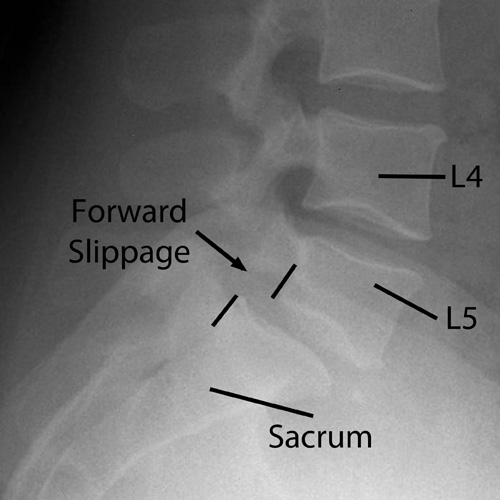
Degenerative lumbar spondylolisthesis is a condition that occurs when one vertebra in the lower back slips forward over the vertebra below it. This slip leads to instability and can result in pain, discomfort, and nerve-related symptoms. It typically affects individuals as they age, particularly those over 50, and is one of the most common causes of lower back pain in older adults.
Understanding the causes, symptoms, diagnosis, and treatment options for degenerative lumbar spondylolisthesis can help you better manage this condition.
What Causes Degenerative Lumbar Spondylolisthesis?
Degenerative spondylolisthesis is primarily caused by the wear and tear of the spine over time. This degeneration affects the intervertebral discs, facet joints, and ligaments that hold the vertebrae together. As the discs lose height and the facet joints undergo arthritis, the vertebrae may slip forward, leading to instability.
Unlike isthmic spondylolisthesis, which involves a defect in the pars interarticularis (the part of the vertebra that connects the joints), degenerative spondylolisthesis occurs without this defect. Instead, it’s caused by a combination of weakened ligaments, muscle imbalances, and degenerative changes that affect the spine’s structure and stability.
Who Is at Risk?
Degenerative spondylolisthesis is most commonly seen in people over the age of 50. The condition is more prevalent in women, with women being six times more likely to develop it than men. Several factors increase the likelihood of developing this condition, including:
Age: As we age, the wear and tear on the spine increases, leading to degenerative changes.
Pregnancy: Women who have had multiple pregnancies are at a higher risk due to the increased stress on the spine.
Genetics: Certain anatomical features, like facet tropism or sagitally oriented facet joints, can increase the risk.
Obesity: Carrying excess weight adds strain to the spine, which may contribute to degeneration.
History of surgery: Previous spinal surgeries, especially those involving the lower back, can increase the risk.
Symptoms of Degenerative Lumbar Spondylolisthesis
Symptoms can vary, but the most common complaint is lower back pain that may worsen with activity, especially activities that involve standing, walking, or bending. As the vertebra slips, it can put pressure on nearby nerves, causing radicular symptoms such as:
Pain radiating into the buttocks, thighs, or legs (sciatica)
Numbness or tingling in the legs
Weakness in the legs, leading to difficulty standing or walking for long periods
Neurogenic claudication, which involves pain, cramping, or weakness in the legs when walking or standing
In severe cases, symptoms like bowel or bladder dysfunction or saddle numbness may indicate cauda equina syndrome, a medical emergency.
How Is Degenerative Spondylolisthesis Diagnosed?
Diagnosing degenerative lumbar spondylolisthesis involves a combination of physical exams and imaging tests. During the physical exam, your healthcare provider may check for signs of instability, such as pain or restricted motion. Specific orthopedic tests like the Stork Test or Straight Leg Raise Test can help determine whether the spondylolisthesis is causing nerve-related symptoms.
Imaging tests play a crucial role in diagnosing the severity of the condition. X-rays are commonly used to visualize the degree of vertebral slippage, which is graded on a scale of 1-4 based on the percentage of displacement. MRI or CT scans may be used to assess nerve compression and surrounding soft tissues.
Treatment Options for Degenerative Lumbar Spondylolisthesis
Treatment for degenerative spondylolisthesis typically starts conservatively, focusing on relieving symptoms and preventing further progression. The following approaches are commonly used:
1. Physical Therapy
A customized physical therapy program can help strengthen the muscles that support the spine, improve flexibility, and promote proper posture. Core stability exercises are particularly important for stabilizing the spine and reducing the risk of further slippage. Stretching exercises for the hamstrings and hip flexors, along with strengthening exercises for the core and gluteal muscles, can improve overall spinal health and reduce pain.
2. Pain Management
Nonsteroidal anti-inflammatory drugs (NSAIDs) may be used to relieve pain and reduce inflammation. In some cases, epidural steroid injections may be recommended to provide short-term relief from nerve compression.
3. Spinal Manipulation
In cases of mild to moderate degeneration, spinal manipulation performed by a chiropractor can help relieve pain and improve movement. However, high-velocity low-amplitude (HVLA) adjustments should be avoided in patients with significant instability.
4. Weight Management
Maintaining a healthy weight can reduce stress on the spine, particularly in individuals with lower crossed syndrome. Managing your weight through diet and regular aerobic exercise like walking, swimming, or stationary cycling can be beneficial.
5. Surgical Treatment
If conservative treatments fail, or if the condition progresses and causes significant neurological symptoms, surgery may be necessary. The most common surgical approach for degenerative spondylolisthesis is a combination of spinal fusion and decompression. Spinal fusion involves stabilizing the spine by fusing two or more vertebrae, while decompression surgery removes the bone spurs or disc material pressing on the nerves.
Preventing Degenerative Lumbar Spondylolisthesis
While you can’t stop the natural aging process, there are steps you can take to prevent or delay the onset of degenerative lumbar spondylolisthesis:
Exercise regularly to maintain strength and flexibility.
Avoid high-impact activities that may place excessive stress on the spine.
Practice good posture to reduce unnecessary strain on your back.
Engage in low-impact activities, like swimming or walking, to improve spinal health without overloading your joints.
Stay active to maintain muscle strength and spinal stability.
Practice proper lifting techniques to avoid excessive strain on your back.
When to Seek Medical Attention
If you experience any of the following symptoms, it is important to seek medical advice immediately:
Persistent lower back pain that doesn’t improve with rest or pain relief.
Sudden onset of weakness or numbness in the legs.
Difficulty controlling bladder or bowel function.
Severe pain that prevents you from walking or standing.
Degenerative lumbar spondylolisthesis is a common condition in older adults that can significantly affect quality of life. However, with early diagnosis and proper management, many people can maintain an active lifestyle and minimize the impact of this condition. If you are experiencing back pain, radicular symptoms, or any other signs of spondylolisthesis, contact a healthcare professional to discuss the best course of action for your specific situation.
NEW PATIENTS
Step 1
Call today to schedule your convenient appointment.
Step 2
Pre-register your important health information on your phone or computer to save time.
Step 3
Meet your new doctor for a customized plan and start moving toward your goal!
Discover how we may help!
We are the Memphis area’s top-rated chiropractic group, providing you with gentle chiropractic care, dry needle therapy, exercise therapy, and therapeutic massage.

2845 Summer Oaks Dr, Memphis, TN 38134
(901) 377-2340
Life Shouldn't Hurt!
You Deserve To Feel Great. We Can Help!
Your go-to Chiropractor in Memphis, TN

Richard L. Cole, DC, DACNB, DAIPM, FIACN, FICC
Jeffrey D. Luebbe, DC, CCRD, CCSP
W. Steven Vollmer, DC, DAAPM
Bradford J. Cole, DC, MS, CSCS
J. Colby Poston, DC
Daniel H. Smith, DC
2845 Summer Oaks Dr., Memphis, TN 38134
(901) 377-2340
Monday – Friday:
8:00 AM – 6:00 PM
Saturday :
8:00 AM – 12:00 PM
Walk-ins are Welcome!
© 2025 Cole Pain Therapy Group, All Rights Reserved