How to Overcome Shoulder Impingement Pain and Restore Mobility
Shoulder pain is one of the most common reasons people seek medical care, and Shoulder Impingement Syndrome (SAIS) is often the culprit. This condition develops when the rotator cuff tendons become compressed under the acromion (part of the shoulder blade), leading to irritation, inflammation, and sometimes tearing. Left untreated, it can progress to more severe problems such as rotator cuff tears, chronic pain, and loss of mobility.
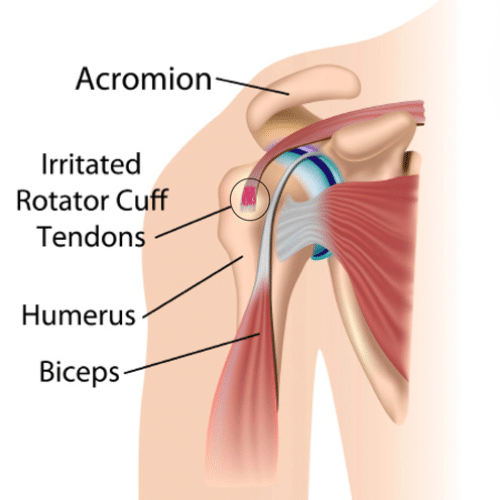
Causes of Shoulder Impingement
Shoulder impingement often results from repetitive overhead movement and muscle imbalance. This is why it commonly affects athletes who play baseball, tennis, volleyball, and pickleball, as well as professionals such as carpenters, painters, and electricians.
Key contributing factors include:
Poor posture, especially forward head position or rounded shoulders
Weakness of stabilizing muscles, leading to scapular dyskinesis
Cervical and spinal issues such as Thoracic Segmental Joint Dysfunction or even Whiplash Neck Injuries
Rotator cuff weakness and imbalance (sometimes associated with Glenohumeral Internal Rotation Deficit (GIRD) in throwing athletes)
Anatomical variations in the acromion bone shape
Impingement doesn’t occur in isolation. It may overlap with other shoulder problems like Frozen Shoulder (Adhesive Capsulitis), SLAP Lesion, or even a past Glenohumeral Dislocation. Identifying these underlying factors is essential to lasting recovery.
Symptoms You May Notice
The earliest signs of shoulder impingement are often activity-related. Pain usually starts as a sharp, pinching sensation when raising the arm overhead or reaching behind the back. Over time, symptoms may progress to:
A constant ache in the front or side of the shoulder
Pain that worsens at night, especially when lying on the affected side
Decreased range of motion and stiffness
Weakness during lifting or rotating the arm
A “painful arc” of motion, typically between 60–120° of arm elevation
Because some symptoms overlap with other conditions such as Headache or even Neurological irritation from the cervical spine, a detailed assessment is important.
Diagnosis
Clinicians use a combination of orthopedic tests and, when needed, imaging to confirm SAIS. Common physical exam maneuvers include:
Neer Test and Hawkins-Kennedy Test – reproduce pain by positioning the arm overhead
Empty Can Test – checks supraspinatus tendon function
Scapular Assistance Test – determines if correcting shoulder blade movement reduces pain
Imaging such as X-rays, ultrasound, or MRI may be recommended if a Clavicle Fracture, tendon tear, or other condition is suspected.
Treatment Options for Shoulder Impingement
The majority of patients recover with conservative care, avoiding the need for injections or surgery. Treatment focuses on restoring normal function through a combination of manual therapy, exercise, and lifestyle changes.
Step 1: Reduce Pain and Inflammation
Ice, selective rest, and activity modification
Manual therapy to release tight muscles (pecs, subscapularis, infraspinatus)
Addressing spinal restrictions, especially cervical and thoracic mobility
Step 2: Improve Mobility
Gentle stretching for the chest, shoulders, and posterior capsule
Correcting postural dysfunction, especially Dysfunctional Breathing patterns that limit rib and shoulder mechanics
Step 3: Strengthen and Stabilize
Rotator cuff and scapular stabilizer strengthening
Core-shoulder chain exercises to retrain movement in athletes
Progressive loading with eccentric and concentric exercises
Step 4: Restore Function and Prevent Recurrence
Sport- or work-specific retraining (e.g., throwing, lifting, overhead reaching)
Return-to-play progression for athletes
Education on sleep positions, since night pain is a hallmark symptom
For stubborn cases, adjunct therapies such as dry needling, kinesiology taping, or shockwave therapy may also be recommended.
Long-Term Outlook
Most patients experience significant improvement with a structured rehabilitation plan. In fact, research shows exercise-based care is just as effective—if not more—than surgical decompression for impingement syndrome.
Our goal is not only to relieve your current pain but also to help you move with confidence, reduce the chance of reinjury, and get back to the activities you love.
If shoulder pain is interfering with your daily activities, sleep, or sports, don’t wait until it progresses to a rotator cuff tear. Our team works closely with referring physicians to ensure you get the right diagnosis and best treatment pathway.
Whether you’re dealing with shoulder pain, recovering from a sports injury, or experiencing related conditions like Restless Leg Syndrome, Morton’s Neuroma, or Adductor Muscle Strain, we’re here to help.
NEW PATIENTS
Step 1
Call today to schedule your convenient appointment.
Step 2
Pre-register your important health information on your phone or computer to save time.
Step 3
Meet your new doctor for a customized plan and start moving toward your goal!
Discover how we may help!
We are the Memphis area’s top-rated chiropractic group, providing you with gentle chiropractic care, dry needle therapy, exercise therapy, and therapeutic massage.

2845 Summer Oaks Dr, Memphis, TN 38134
(901) 377-2340
Life Shouldn't Hurt!
You Deserve To Feel Great. We Can Help!
Your go-to Chiropractor in Memphis, TN

Richard L. Cole, DC, DACNB, DAIPM, FIACN, FICC
Jeffrey D. Luebbe, DC, CCRD, CCSP
W. Steven Vollmer, DC, DAAPM
Bradford J. Cole, DC, MS, CSCS
J. Colby Poston, DC
Daniel H. Smith, DC
2845 Summer Oaks Dr., Memphis, TN 38134
(901) 377-2340
Monday – Friday:
8:00 AM – 6:00 PM
Saturday :
8:00 AM – 12:00 PM
Walk-ins are Welcome!
© 2025 Cole Pain Therapy Group, All Rights Reserved