Achilles Tendinitis Symptoms and Diagnosis: What You Need To Know for Recovery
Achilles tendinitis is one of the most common causes of pain at the back of the heel, particularly among runners, active adults, and people who suddenly increase their level of physical activity. The condition affects the Achilles tendon, the thick band of connective tissue that joins the calf muscles to the heel bone and helps generate the force needed for walking, running, climbing stairs, and jumping. Although the term Achilles tendinitis suggests inflammation, long-standing cases often involve changes in the tendon structure, making Achilles tendinopathy a more accurate description for many patients.
Symptoms rarely appear without warning. In many cases, the tendon has been under increasing stress for weeks or months before pain develops. A new pair of shoes, a long hike, increased running mileage, hill training, or a return to exercise after time away may overload an already vulnerable tendon, triggering pain that seems to appear suddenly. What feels like a new injury is often the result of repetitive stress that has gradually exceeded the tendon’s ability to recover.
Recognizing the early signs of Achilles tendinitis and understanding why the tendon became overloaded are essential for preventing the condition from progressing. Factors such as limited ankle mobility, tight calf muscles, poor foot mechanics, reduced balance, weakness through the hips, or abnormal walking and running patterns can all increase stress on the Achilles tendon. Identifying these contributing factors allows treatment to focus not only on relieving pain but also on reducing the likelihood of future injuries.
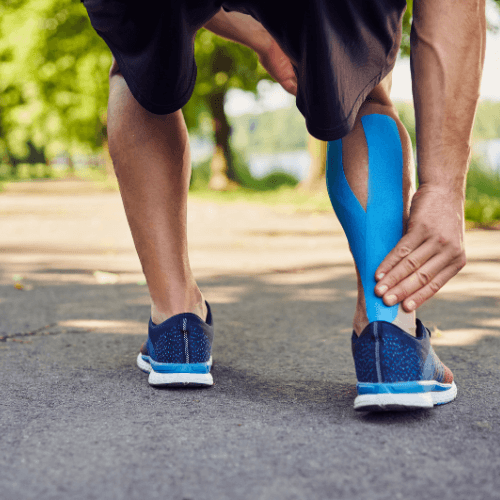
What are the first signs of Achilles tendinitis?
Early symptoms often develop gradually and may include:
- Pain or stiffness along the back of the heel, especially with the first steps in the morning
- Tenderness or swelling around the Achilles tendon
- Pain during walking, running, climbing stairs, or pushing off the toes
Many people notice that the tendon feels better after warming up but becomes sore again later in the day or after exercise.
How is Achilles tendinitis diagnosed?
Diagnosis begins with a physical examination that evaluates the Achilles tendon, ankle mobility, calf flexibility, muscle strength, and walking mechanics. Your healthcare provider may also assess how the foot, knee, hip, and lower back move together to identify factors contributing to excessive stress on the tendon. Imaging studies such as ultrasound or MRI are sometimes recommended when the diagnosis is uncertain or a tendon tear is suspected.
Can Achilles tendinitis heal on its own?
Some mild cases improve with rest and temporary activity modification, but symptoms often return if the underlying cause of tendon overload is not addressed. Progressive rehabilitation and correcting movement problems help the tendon recover more effectively while lowering the risk of recurring pain.
What conditions can be mistaken for Achilles tendinitis?
Several conditions can produce symptoms similar to Achilles tendinitis, including:
- Retrocalcaneal bursitis
- Plantar fasciitis
- Partial Achilles tendon tears
- Sever’s disease in growing adolescents
Because these conditions require different treatment approaches, obtaining an accurate diagnosis is an important part of choosing the most appropriate treatment.
At Cole Pain Therapy Group, we believe that successful recovery begins with understanding how your tendon is functioning—not simply identifying where it hurts. We take the time to evaluate how you walk, how your foot and ankle move, and how the muscles throughout your lower extremity work together during everyday activities. By identifying the movement patterns that continue to overload the Achilles tendon, we can help you make meaningful changes that support long-term recovery. Throughout your care, we provide practical guidance on activity progression, footwear considerations, exercise progression, and strategies to help you return to work, recreation, and sports with greater confidence while reducing the risk of recurring tendon pain.
Related Reads
NEW PATIENTS
Step 1
Call today to schedule your convenient appointment.
Step 2
Pre-register your important health information on your phone or computer to save time.
Step 3
Meet your new doctor for a customized plan and start moving toward your goal!
Discover how we may help!
We are the Memphis area’s top-rated chiropractic group, providing you with gentle chiropractic care, dry needle therapy, exercise therapy, and therapeutic massage.

2845 Summer Oaks Dr, Memphis, TN 38134
(901) 377-2340
Life Shouldn't Hurt!
You Deserve To Feel Great. We Can Help!
Your go-to Chiropractor in Memphis, TN

Richard L. Cole, DC, DACNB, DAIPM, FIACN, FICC
Jeffrey D. Luebbe, DC, CCRD, CCSP
W. Steven Vollmer, DC, DAAPM
Bradford J. Cole, DC, MS, CSCS
J. Colby Poston, DC
Daniel H. Smith, DC
2845 Summer Oaks Dr., Memphis, TN 38134
(901) 377-2340
Monday – Friday:
8:00 AM – 6:00 PM
Saturday :
8:00 AM – 12:00 PM
Walk-ins are Welcome!
© 2025 Cole Pain Therapy Group, All Rights Reserved