Elbow Tendinitis: The Leading Causes and How to Prevent It
Elbow tendinitis, commonly known as tennis elbow (lateral epicondylitis) or golfer’s elbow (medial epicondylitis), is one of the most common overuse injuries affecting the arm. It develops when the tendons that connect the forearm muscles to the elbow are repeatedly overloaded, creating microscopic damage where the tendon attaches to the bone. As this stress continues, the tendon may struggle to heal properly, leading to persistent pain, reduced grip strength, and difficulty performing everyday activities.
Symptoms usually begin gradually with mild tenderness around the inside or outside of the elbow but can progress to pain when gripping, lifting, twisting, typing, using hand tools, opening jars, shaking hands, or even picking up light objects. Although elbow tendinitis is commonly associated with racquet sports and golf, it frequently affects people whose work or hobbies involve repetitive gripping, lifting, or wrist movements, including construction workers, mechanics, landscapers, office workers, musicians, and healthcare professionals.
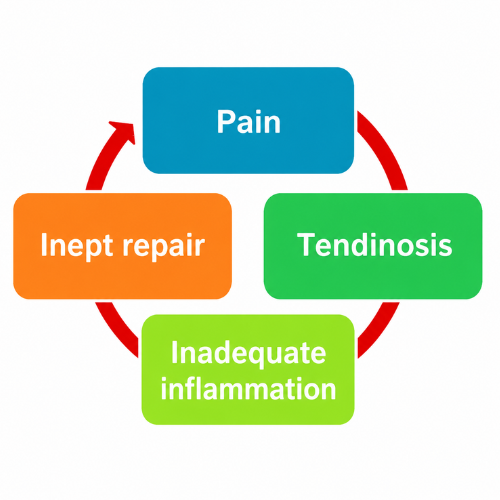
Dr. Cole often compares elbow tendinitis to a home remodeling project that never gets finished. If old paint, damaged flooring, or worn wallpaper isn’t completely removed before new materials are installed, the renovation never achieves a lasting result. Tendons heal in much the same way. If repetitive stress continues without correcting the underlying cause, the tendon remains trapped in a cycle of ongoing damage and incomplete repair. Over time, many chronic cases progress from tendonitis, which suggests inflammation, to tendinosis, where the tendon begins to degenerate because normal healing has been disrupted. Successful treatment focuses not only on reducing pain but also on restoring tendon health and correcting the mechanical factors responsible for excessive strain.
Although not every case can be prevented, maintaining forearm strength and flexibility, using proper lifting mechanics, varying repetitive activities, taking regular breaks, and seeking treatment when symptoms first appear can significantly reduce the risk of developing chronic elbow pain.
How do you treat tendonitis in the elbow?
Most cases of elbow tendonitis improve with conservative treatment. Treatment depends on the severity of the condition and how long symptoms have been present but often includes activity modification, chiropractic care, therapeutic exercise, soft tissue therapy, instrument-assisted soft tissue mobilization (IASTM), and progressive strengthening exercises that encourage tendon remodeling. Correcting the repetitive stress or muscle imbalance that caused the injury is just as important as reducing pain, helping improve long-term recovery and lowering the risk of recurrence.
What can be mistaken for elbow tendonitis?
Several conditions can produce symptoms similar to elbow tendonitis. These include ligament injuries, elbow osteoarthritis, bursitis, muscle strains, cubital tunnel syndrome, radial tunnel syndrome, and cervical radiculopathy, where a pinched nerve in the neck causes pain that travels into the arm. Because these conditions require different treatment approaches, a comprehensive evaluation is essential for identifying the true source of elbow pain and developing the most appropriate treatment plan.
How do you fix tendonitis in your elbows?
Recovering from elbow tendonitis involves more than resting the joint. Treatment focuses on reducing excessive stress on the injured tendon while restoring forearm strength, flexibility, grip function, and normal movement patterns. Rehabilitation exercises, soft tissue treatment, and correcting repetitive activities help improve tendon capacity and support long-term healing. In chronic cases, treatment may also address tendinosis, where the tendon has undergone degenerative changes because normal healing remained incomplete.
How do I cure elbow tendonitis?
Most people recover from elbow tendonitis with conservative care, especially when treatment begins early. Recovery depends on the severity of the tendon injury and whether the repetitive activity causing the overload has been corrected. Following a personalized treatment plan, completing strengthening exercises, gradually returning to activity, and improving movement mechanics can help restore tendon function while reducing the likelihood of future flare-ups.
At Cole Pain Therapy Group, we look beyond the painful tendon to identify why it became overloaded in the first place. Our doctors evaluate forearm muscle function, joint mobility, grip mechanics, movement patterns, and the repetitive activities that may be placing excessive stress on the tendon. Based on your individual needs, treatment may include chiropractic care, soft tissue therapy, instrument-assisted soft tissue mobilization, therapeutic exercise, and rehabilitation to improve tendon capacity, restore strength, and support healthy movement.
Our goal is not simply to calm painful symptoms but to help your tendon tolerate everyday activities again. By addressing the mechanical factors contributing to excessive tendon stress, we aim to improve recovery, restore function, and help you return to work, sports, and daily activities with greater comfort while lowering the risk of future episodes.
Related Reads
NEW PATIENTS
Step 1
Call today to schedule your convenient appointment.
Step 2
Pre-register your important health information on your phone or computer to save time.
Step 3
Meet your new doctor for a customized plan and start moving toward your goal!
Discover how we may help!
We are the Memphis area’s top-rated chiropractic group, providing you with gentle chiropractic care, dry needle therapy, exercise therapy, and therapeutic massage.

2845 Summer Oaks Dr, Memphis, TN 38134
(901) 377-2340
Life Shouldn't Hurt!
You Deserve To Feel Great. We Can Help!
Your go-to Chiropractor in Memphis, TN

Richard L. Cole, DC, DACNB, DAIPM, FIACN, FICC
Jeffrey D. Luebbe, DC, CCRD, CCSP
W. Steven Vollmer, DC, DAAPM
Bradford J. Cole, DC, MS, CSCS
J. Colby Poston, DC
Daniel H. Smith, DC
2845 Summer Oaks Dr., Memphis, TN 38134
(901) 377-2340
Monday – Friday:
8:00 AM – 6:00 PM
Saturday :
8:00 AM – 12:00 PM
Walk-ins are Welcome!
© 2025 Cole Pain Therapy Group, All Rights Reserved