Overcoming Meniscus Pain: A Complete Guide to Knee Relief
If your knee pain keeps flaring up or feels sharp during bending, twisting, or climbing stairs, a meniscus injury may be part of the problem. Meniscus injuries are more common than most people realize, and the extra stress they create inside the knee can lead to stiffness, swelling, and recurring pain that makes daily movement difficult.
At Cole Pain Therapy Group, we help patients across the greater Memphis area, including Bartlett, Lakeland, Germantown, Cordova, and Arlington, recover from meniscus injuries with personalized care that targets the true source of pain and restores confident movement.
This guide explains what the meniscus does, how injuries happen, what symptoms to watch for, and the most effective treatment options for long term knee relief.
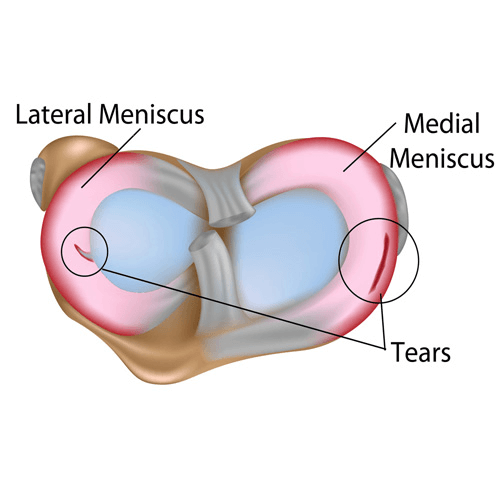
What is the Meniscus and Why Does It Matter?
The menisci are two C shaped fibrocartilage pads located between the thigh bone and the shin bone. They help your knee:
Absorb shock
Distribute pressure evenly during walking, squatting, and athletic movement
The outer third of the meniscus has good blood supply, which means it can heal more easily. The inner two thirds have limited vascularity, so some tears recover with conservative care while others require structured rehabilitation. Younger patients often experience traumatic tears, while older adults tend to develop degenerative tears over time.
How a Meniscus Injury Presents
Meniscus injuries can show up differently depending on age, activity, and injury type.
Younger or athletic patients may experience:
A sudden twist on a loaded knee
Immediate difficulty bearing weight
Swelling within several hours
A noticeable limp or altered gait
Older adults may experience:
Gradual onset of pain with no clear injury
Pain with deep bending or rotation
Common symptoms include:
Pain when squatting or kneeling
Clicking, catching, or locking between 20 to 45 degrees of extension
Swelling or stiffness, sometimes with a Baker’s cyst
Difficulty straightening or fully bending the knee
Joint line tenderness
Orthopedic tests that help identify meniscus injury:
Thessaly test at 20 degrees
McMurray’s test
Ege’s test
These tests reproduce pain or catching with rotation and are often more reliable than MRI alone for determining if symptoms are clinically relevant.
How Do You Treat a Meniscus Injury?
Most meniscus injuries respond well to conservative, non surgical care. Treatment focuses on reducing inflammation, restoring mobility, strengthening the surrounding muscles, and retraining movement patterns that overload the knee.
1. Manual therapy and joint mobilization
Improves motion in the knee, hip, ankle, and fibular head to reduce pressure on irritated tissue.
2. Corrective exercise
Strengthening is essential and often includes:
Quadriceps control
Hamstring strength
Calf flexibility
Hip stability
Core alignment
Deep knee loading is added gradually as healing improves.
3. Soft tissue therapy
Reduces tightness in the quadriceps, hamstrings, adductors, calves, and popliteus.
4. Activity modification and movement retraining
Teaches safer ways to bend, stand, rotate, and lift while protecting the healing meniscus.
5. Bracing
A supportive knee brace may reduce strain during early recovery.
6. Surgical referral only when necessary
Usually considered when:
Mechanical locking is present
A displaced tear blocks motion
Conservative care does not improve symptoms
Most degenerative tears and many traumatic tears can recover fully without surgery when rehab is done correctly.
Can a Meniscus Tear Cause Knee Pain?
Yes. Meniscus tears often cause pain because of:
Inflammation inside the joint
Increased pressure on cartilage surfaces
Swelling that restricts movement
Muscle tightness that limits normal mechanics
Altered gait or compensatory patterns
Pain usually worsens with twisting, squatting, stair climbing, or rising from a chair. Clicking or catching is common.
Can a Meniscus Tear Heal Naturally?
Some tears can heal on their own, especially those located in the vascular outer zone. Even tears that do not fully repair can become pain free with proper rehabilitation. Many degenerative tears respond very well to conservative care.
Healing depends on:
Tear location
Tear size
Patient age
Alignment of the knee
Activity level
Whether aggravating movements are modified
How Common Are Meniscus Injuries?
Meniscus injuries are extremely common and increase with both athletic activity and age. Many people have meniscus tears on MRI without experiencing pain, which is why accurate clinical evaluation is essential.
A targeted exam determines whether the tear is truly responsible for symptoms and guides the most effective care plan.
How We Can Help
At Cole Pain Therapy Group, we provide evidence based care that combines hands on treatment, corrective exercise, and personalized movement retraining. Patients from Memphis, Bartlett, Lakeland, Cordova, Germantown, and Arlington choose us because we focus on restoring knee function, reducing pain, and helping people return safely to the activities they enjoy.
If knee pain is limiting your life and you suspect a meniscus injury, you do not have to manage it alone. With the right plan, long term relief is possible.
Related Reads
NEW PATIENTS
Step 1
Call today to schedule your convenient appointment.
Step 2
Pre-register your important health information on your phone or computer to save time.
Step 3
Meet your new doctor for a customized plan and start moving toward your goal!
Discover how we may help!
We are the Memphis area’s top-rated chiropractic group, providing you with gentle chiropractic care, dry needle therapy, exercise therapy, and therapeutic massage.

2845 Summer Oaks Dr, Memphis, TN 38134
(901) 377-2340
Life Shouldn't Hurt!
You Deserve To Feel Great. We Can Help!
Your go-to Chiropractor in Memphis, TN

Richard L. Cole, DC, DACNB, DAIPM, FIACN, FICC
Jeffrey D. Luebbe, DC, CCRD, CCSP
W. Steven Vollmer, DC, DAAPM
Bradford J. Cole, DC, MS, CSCS
J. Colby Poston, DC
Daniel H. Smith, DC
2845 Summer Oaks Dr., Memphis, TN 38134
(901) 377-2340
Monday – Friday:
8:00 AM – 6:00 PM
Saturday :
8:00 AM – 12:00 PM
Walk-ins are Welcome!
© 2025 Cole Pain Therapy Group, All Rights Reserved