What You Need To Know About Disc Injuries: Diagnosis And Treatment Options
Intervertebral disc injuries are among the most common causes of neck pain, back pain, sciatica, and nerve-related symptoms. The intervertebral discs are strong, flexible cushions located between the vertebrae that absorb shock, distribute pressure, and allow the spine to bend and move smoothly. Although terms such as disc tear, bulging disc, herniated disc, ruptured disc, and degenerative disc disease are often used interchangeably, they describe different conditions that can affect the spine in different ways.
Disc injuries may occur suddenly after lifting something heavy, twisting awkwardly, or experiencing trauma, but they also commonly develop over time because of repetitive stress, age-related degeneration, or everyday wear and tear. Some people have disc changes without any symptoms, while others experience localized neck or back pain, pain that radiates into the arms or legs, numbness, tingling, muscle weakness, or reduced mobility when nearby spinal nerves become irritated or compressed.
Because several spinal conditions can produce similar symptoms, identifying the true source of the pain is essential. A healthcare provider will typically begin with a detailed medical history and physical examination, assessing posture, spinal mobility, muscle strength, reflexes, sensation, and signs of nerve involvement. When appropriate, imaging studies such as X-rays or MRI may be recommended to better understand the condition and guide treatment decisions. Fortunately, many disc injuries respond well to conservative care, allowing patients to improve their symptoms, restore function, and return to normal activities without surgery.
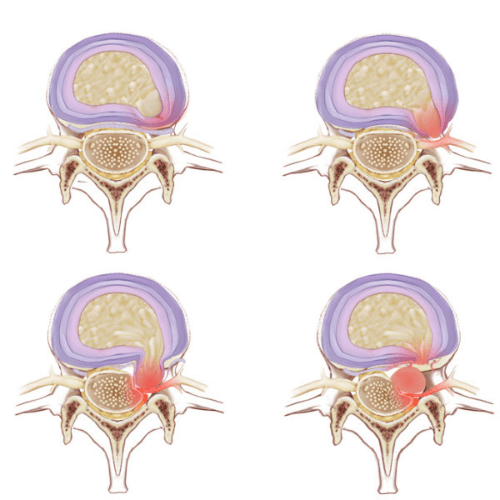
Types of Disc Injuries
Disc Tear
A disc tear, also called an annular tear, occurs when the outer layer of the disc develops a small tear or crack. Some tears cause little or no discomfort, while others can trigger inflammation or progress to a bulging or herniated disc.
Disc Bulge
A bulging disc occurs when the disc extends beyond its normal boundary without the inner material breaking through the outer layer. Many bulging discs are painless and are discovered incidentally during imaging performed for unrelated reasons.
Disc Herniation
A herniated disc develops when the soft inner portion of the disc pushes through a weakened or torn outer layer. If the disc material irritates or compresses a nearby spinal nerve, it may cause pain, numbness, tingling, or muscle weakness that radiates into the arm or leg.
Ruptured Disc
A ruptured disc is a more advanced form of disc herniation in which the outer layer tears, allowing disc material to escape farther into the spinal canal. Symptoms vary depending on the amount of nerve involvement and the location of the injury.
Disc Degeneration
As part of the natural aging process, spinal discs gradually lose water content and flexibility. This degenerative disc disease may reduce disc height, alter spinal mechanics, and contribute to neck or back pain in some individuals, although many people experience no symptoms.
What is the most common disc injury?
Age-related disc degeneration and bulging discs are among the most common spinal findings in adults. In many cases, these changes never cause symptoms. Problems typically occur when the injured disc irritates or compresses a nearby spinal nerve, resulting in pain, numbness, tingling, or muscle weakness.
How are disc problems treated?
Most disc injuries improve with conservative care rather than surgery. Treatment may include:
- Chiropractic care when appropriate
- Therapeutic exercise and rehabilitation
- Activity modification and posture education
- Strategies to improve movement and reduce stress on the spine
While surgery may be recommended for severe nerve compression or progressive neurological symptoms, many patients recover successfully without an operation.
Do herniated discs heal?
Yes. Many herniated discs improve over time as inflammation decreases and the body gradually reabsorbs part of the herniated disc material. Recovery varies depending on the size of the injury, overall health, and adherence to a structured rehabilitation program, but many people experience significant improvement without surgery.
What are the symptoms of a damaged disc?
Symptoms depend on the location and severity of the injury but commonly include:
- Neck or back pain
- Pain that radiates into the arm or leg, including sciatica
- Numbness or tingling
- Muscle weakness
- Stiffness or reduced spinal mobility
Because these symptoms can also occur with other spinal conditions, a professional evaluation is important to determine the underlying cause.
At Cole Pain Therapy Group, we believe that understanding your diagnosis is just as important as treating your symptoms. We’ll take the time to explain what’s happening, discuss how your disc injury may be contributing to your pain, and help you understand the treatment options available to you. Your care is guided by your symptoms, functional goals, and response to treatment—not imaging findings alone. As you recover, we’ll continue to monitor your progress, adjust your rehabilitation plan when needed, and provide practical strategies to help you move more confidently, protect your spine, and reduce the risk of future flare-ups.
Related Reads
NEW PATIENTS
Step 1
Call today to schedule your convenient appointment.
Step 2
Pre-register your important health information on your phone or computer to save time.
Step 3
Meet your new doctor for a customized plan and start moving toward your goal!
Discover how we may help!
We are the Memphis area’s top-rated chiropractic group, providing you with gentle chiropractic care, dry needle therapy, exercise therapy, and therapeutic massage.

2845 Summer Oaks Dr, Memphis, TN 38134
(901) 377-2340
Life Shouldn't Hurt!
You Deserve To Feel Great. We Can Help!
Your go-to Chiropractor in Memphis, TN

Richard L. Cole, DC, DACNB, DAIPM, FIACN, FICC
Jeffrey D. Luebbe, DC, CCRD, CCSP
W. Steven Vollmer, DC, DAAPM
Bradford J. Cole, DC, MS, CSCS
J. Colby Poston, DC
Daniel H. Smith, DC
2845 Summer Oaks Dr., Memphis, TN 38134
(901) 377-2340
Monday – Friday:
8:00 AM – 6:00 PM
Saturday :
8:00 AM – 12:00 PM
Walk-ins are Welcome!
© 2025 Cole Pain Therapy Group, All Rights Reserved